Crawl Space Encapsulation Done Right in Pittsboro
Most homeowners never think about what's happening beneath their feet - until they start noticing musty smells drifting up into the living space, or floors that feel soft and damp. That's usually when the crawl space becomes impossible to ignore. This Pittsboro home had exactly that kind of problem going on below the surface.
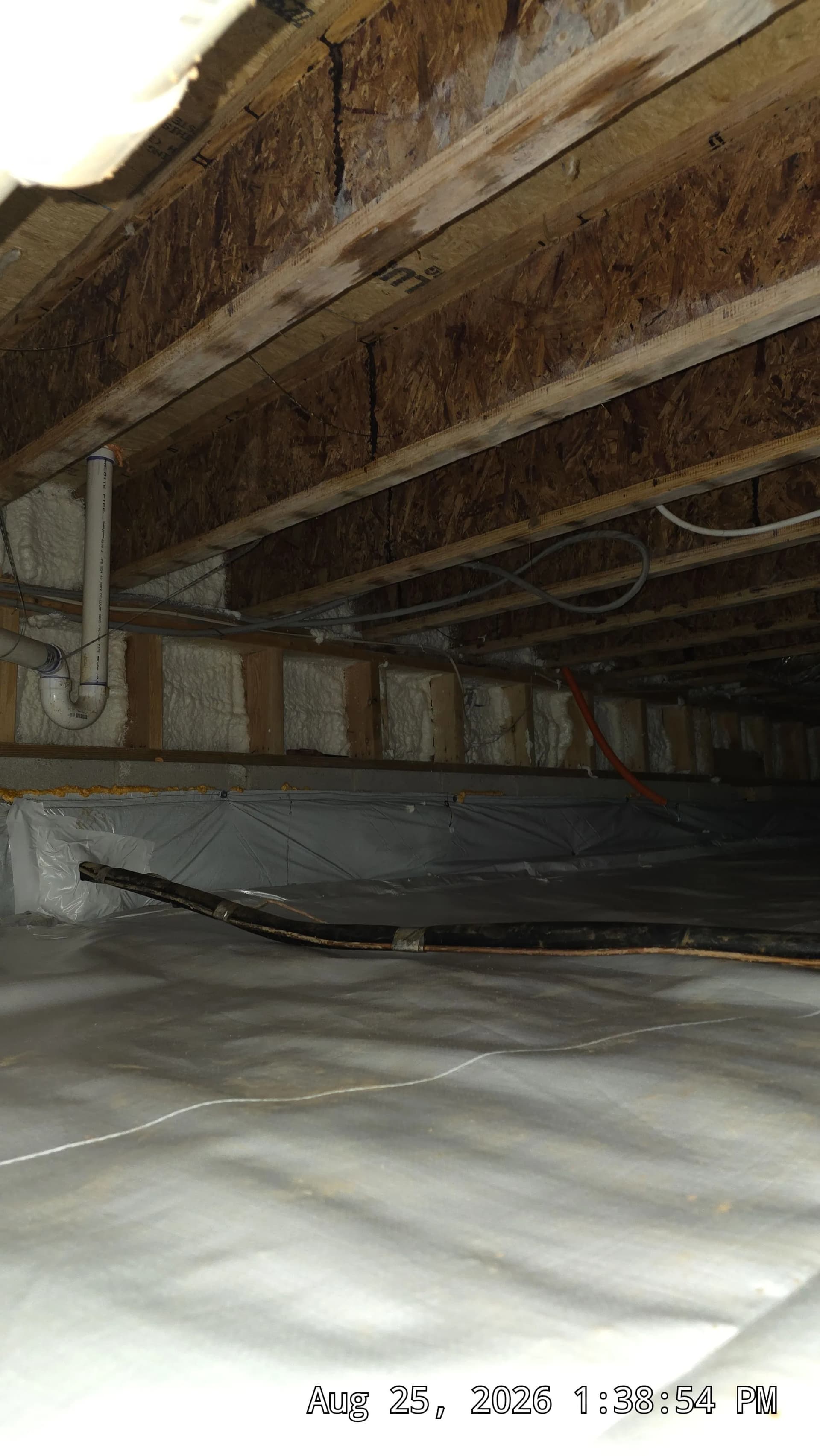
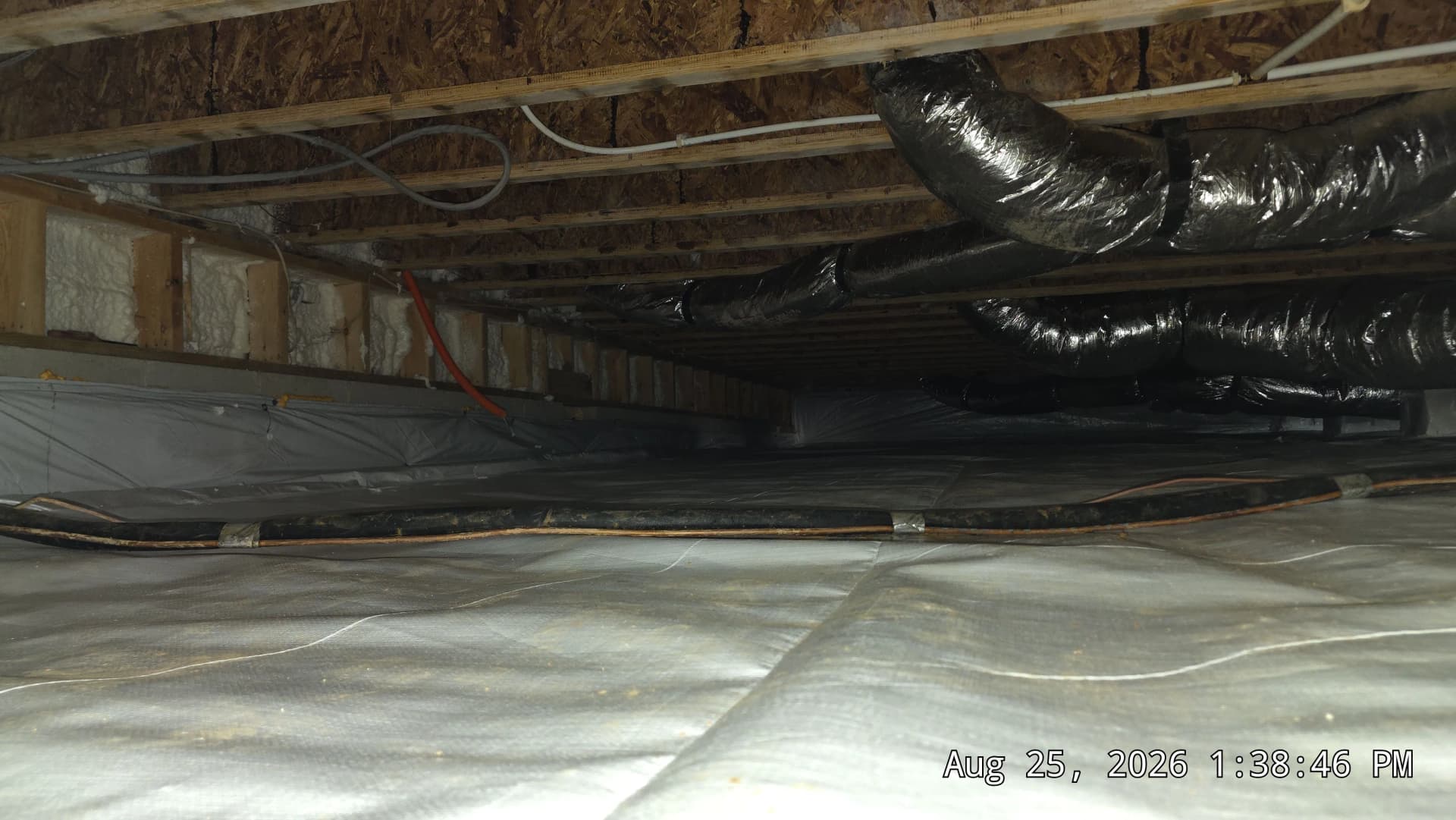
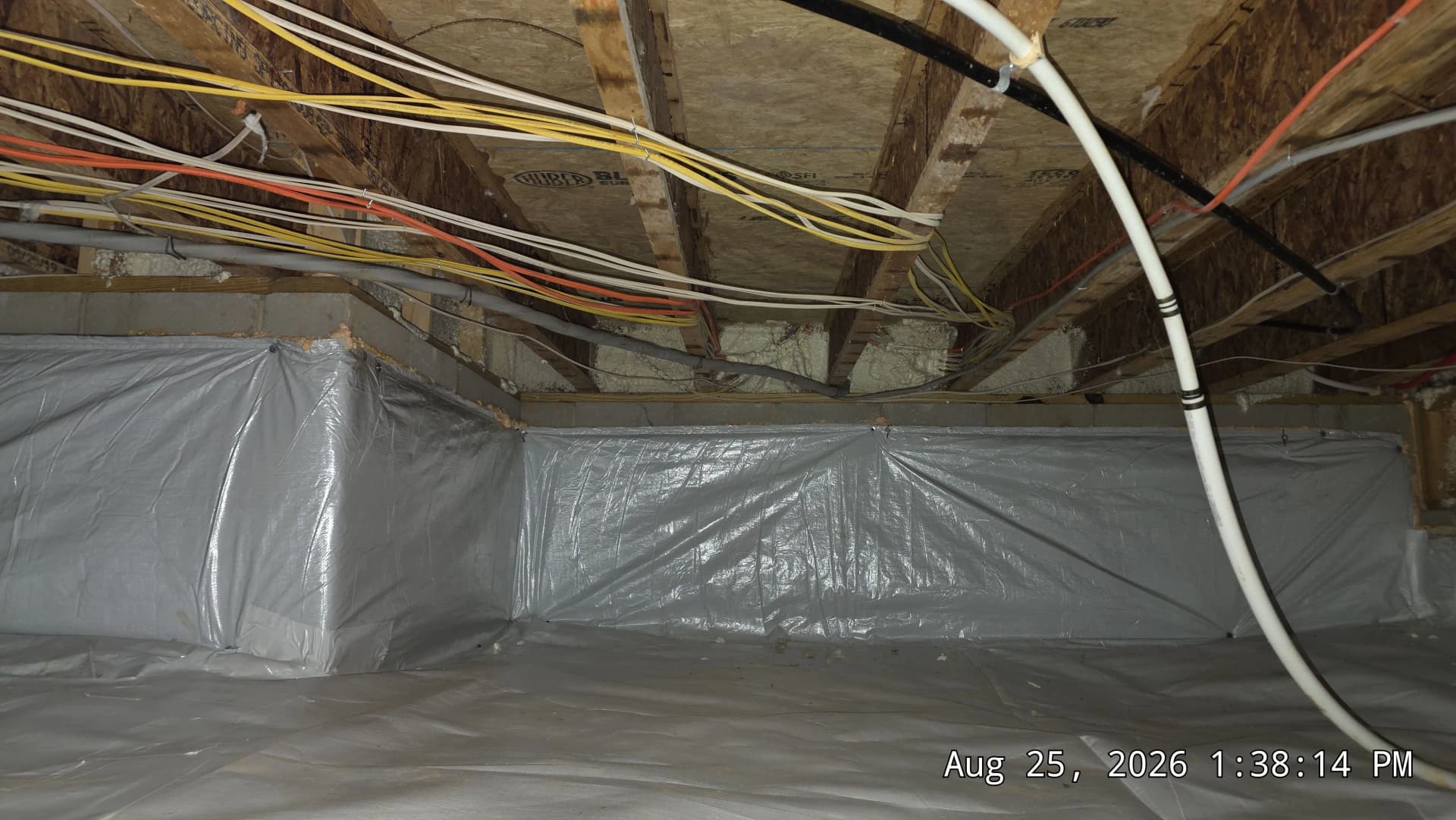
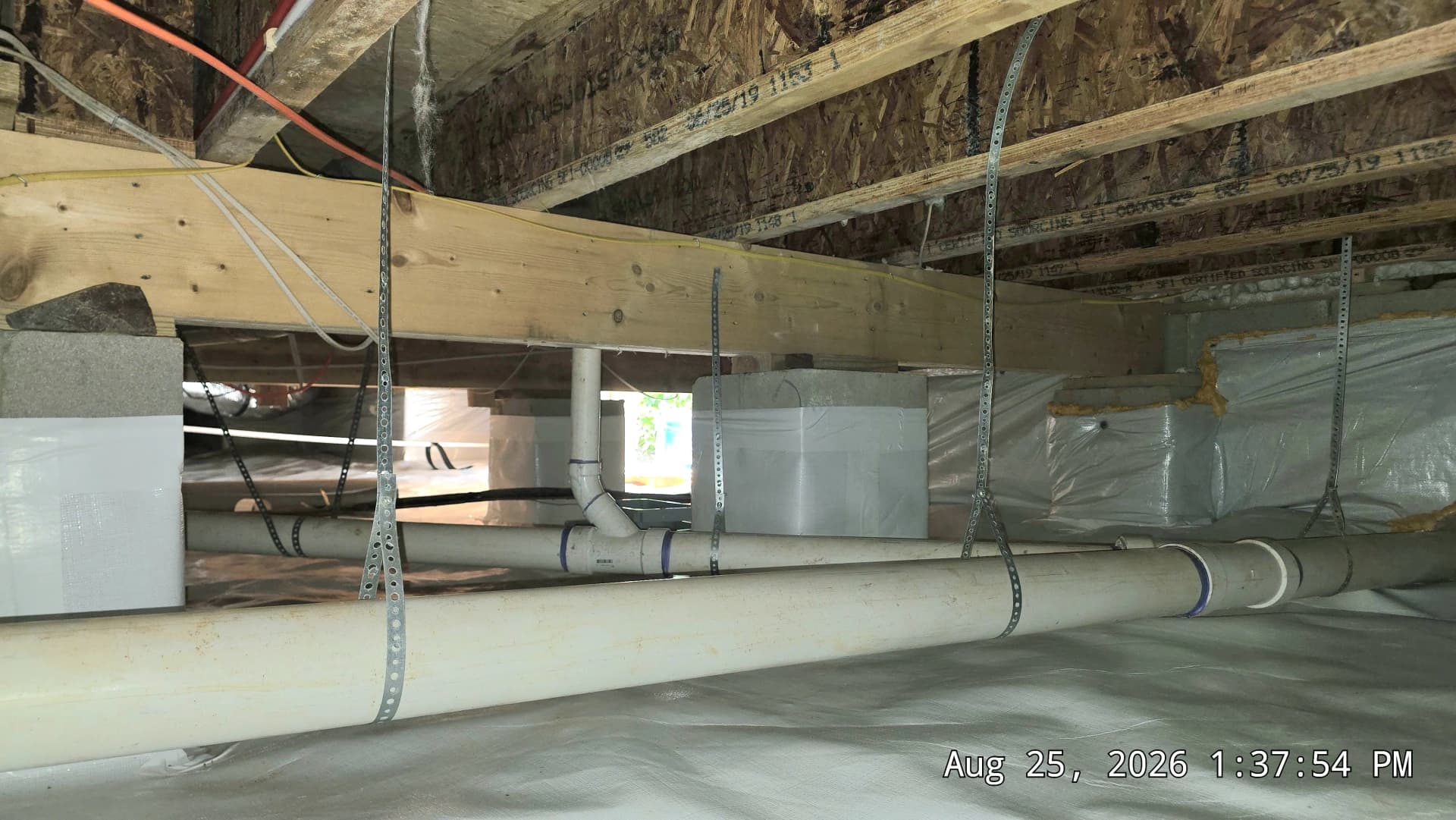
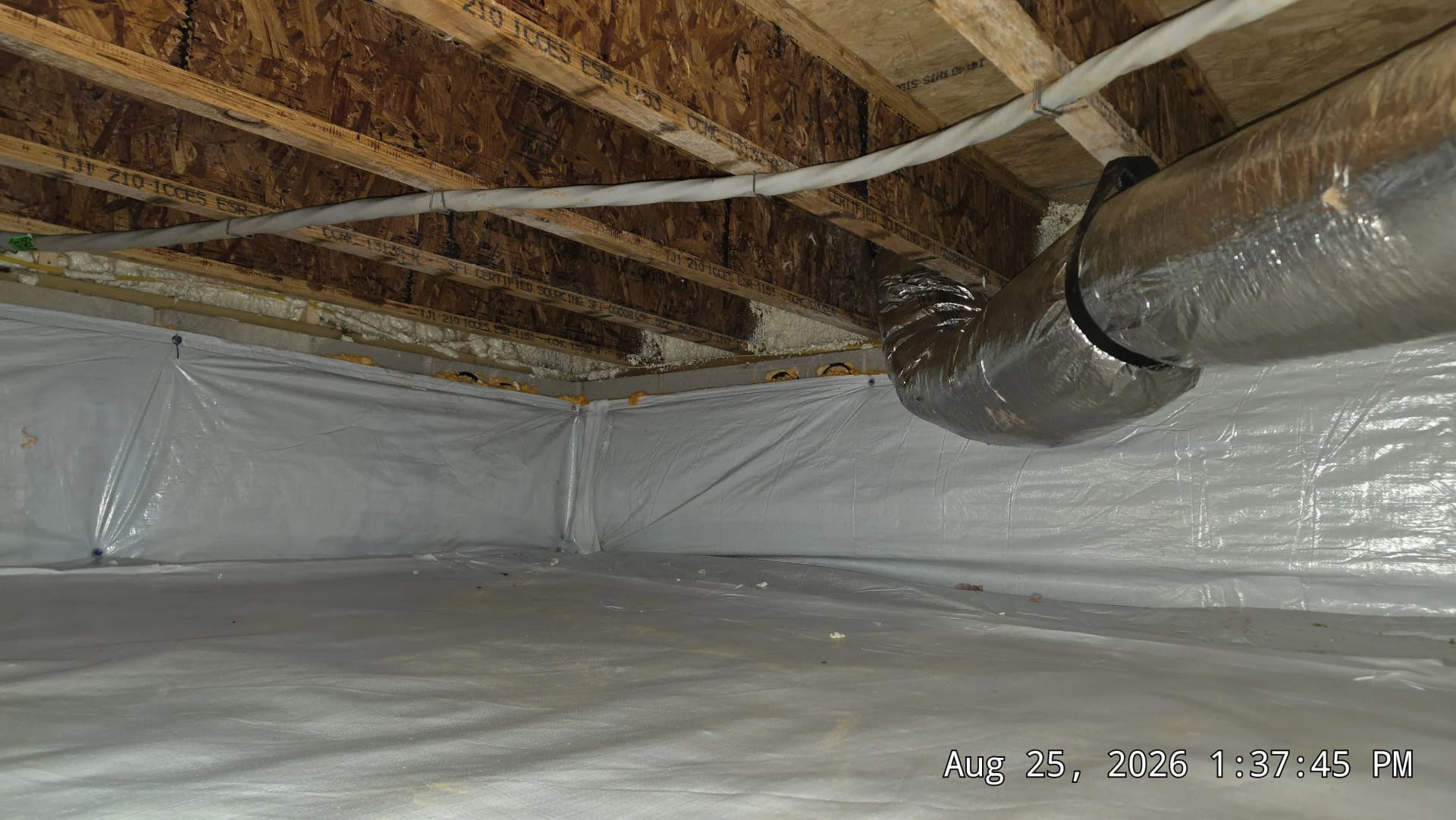
Here's what a full crawl space encapsulation actually looks like when it's done properly. The vapor barrier goes down across the entire floor and runs up along every wall, sealed tight so ground moisture has nowhere to go. We also packed spray foam insulation into the band joist cavities along the perimeter - that's a detail a lot of crews skip, but it makes a real difference in keeping the space thermally controlled and protected.
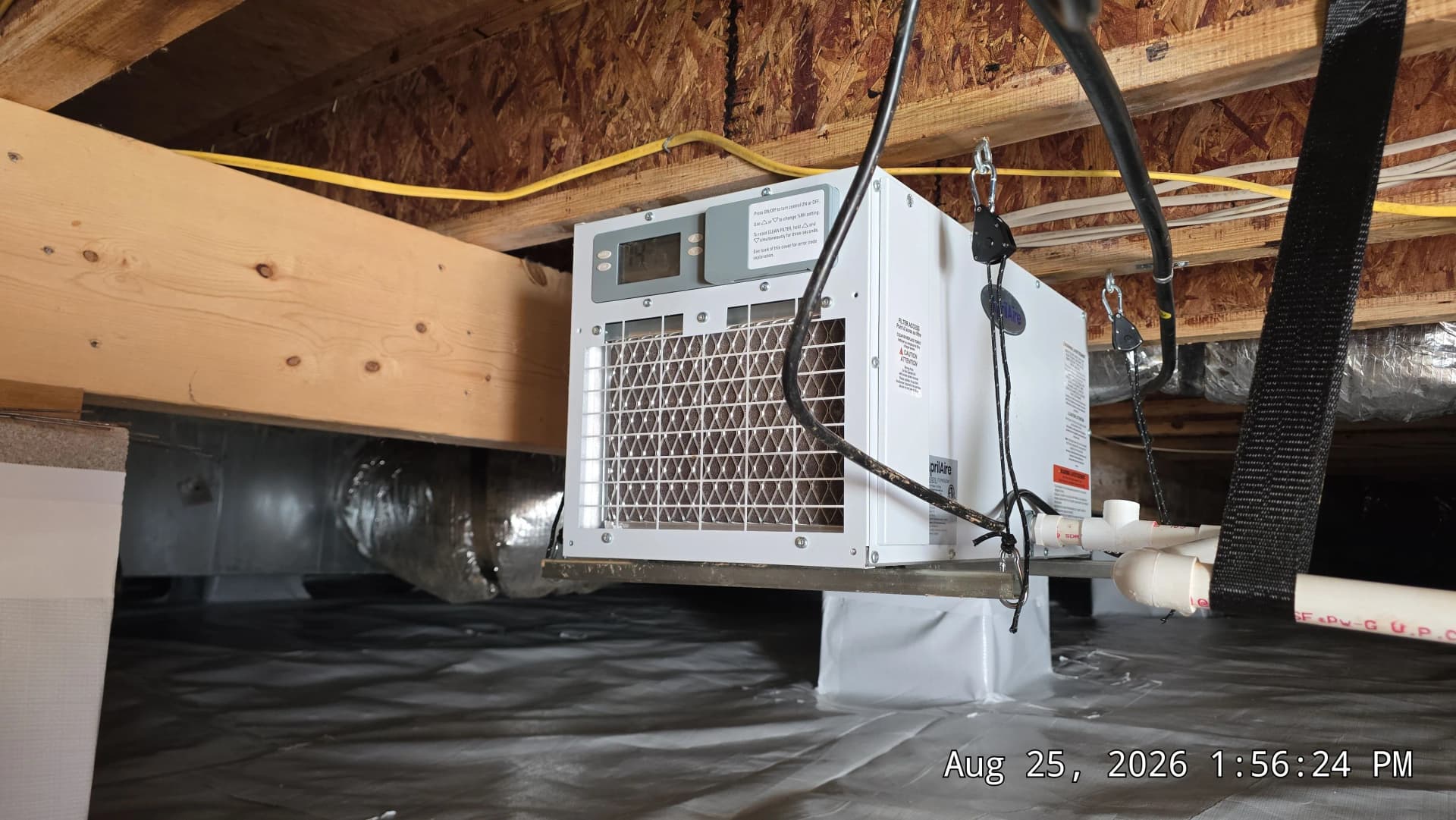
On top of the encapsulation, we hung an AprilAire dehumidifier - suspended cleanly from the floor joists with proper strapping and a dedicated drain line running to PVC. That unit runs automatically to keep humidity levels in check year-round. Without something actively pulling moisture out of the air, even a well-installed vapor barrier can only do so much. The two work together.
What you end up with is a crawl space that's dry, cleaner, and easier to maintain. The air quality inside the home improves because that musty, damp air isn't cycling up through the floor system anymore. The structure stays in better shape. And if something ever needs to be inspected or repaired down there, it's actually a decent environment to work in.
If your crawl space has that damp, heavy feel when you open the access door - or if you're noticing any soft spots, odors, or humidity issues inside the home - it's worth getting it looked at. A proper encapsulation addresses the root cause instead of just masking the symptoms.