Crawl Space Encapsulation Done Right in Raleigh
Most homeowners never think about their crawl space - until something goes wrong. A musty smell creeping into the living area. Floors that feel soft. Energy bills that keep climbing. All of it can trace back to uncontrolled moisture sitting under your home, and in a place like Raleigh where humidity is no joke, the crawl space is one of the first places it shows up.
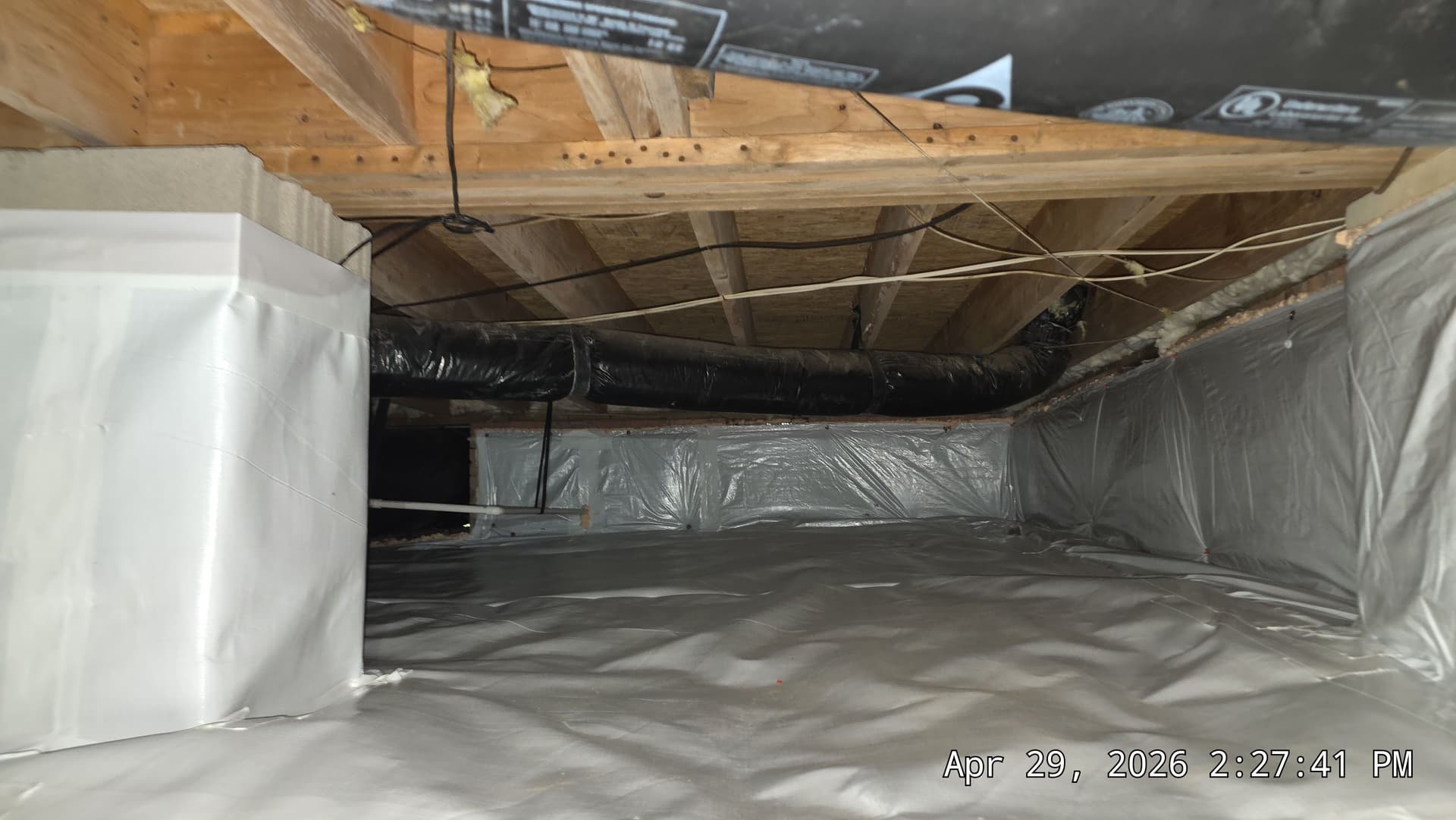
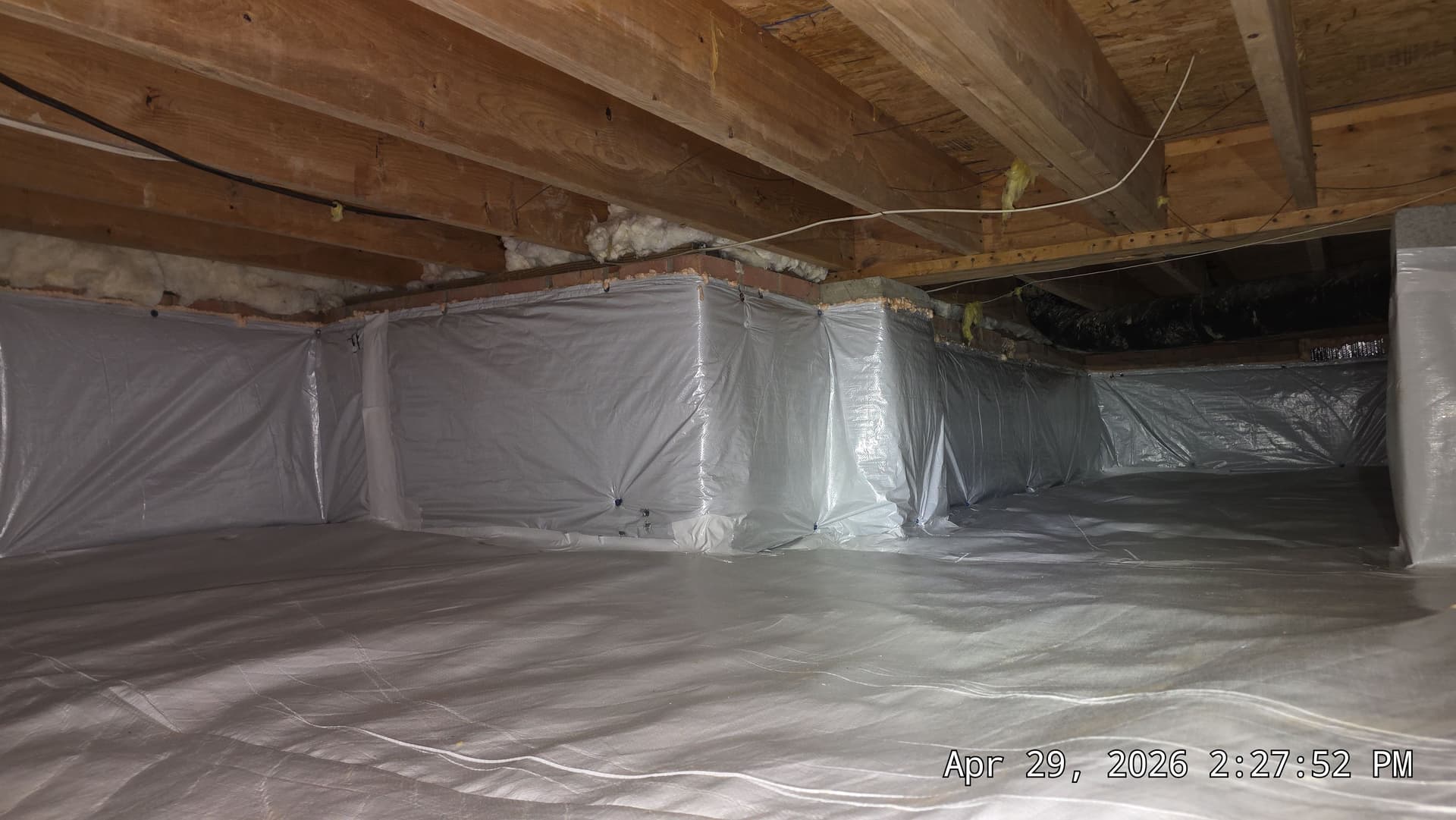
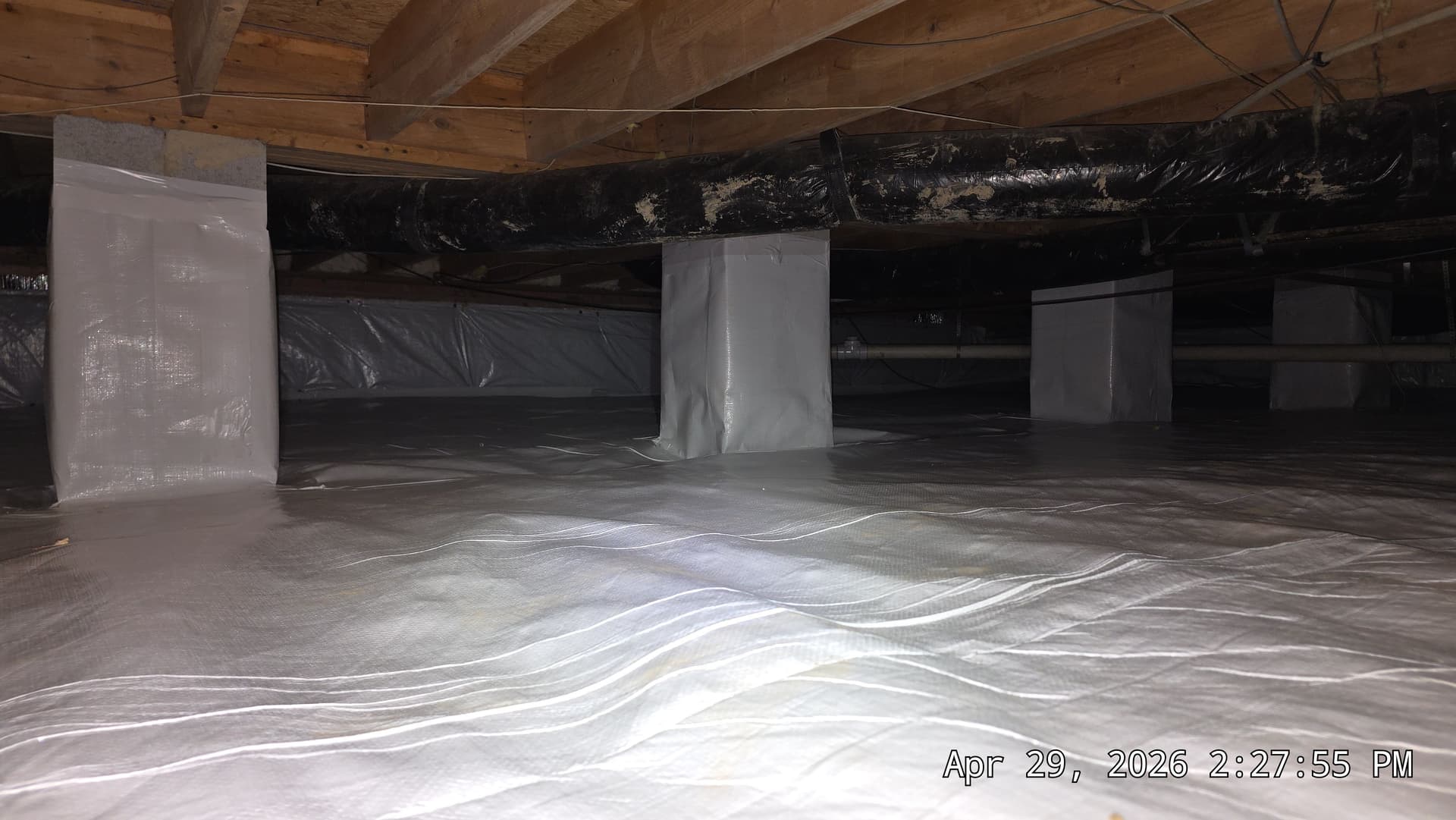
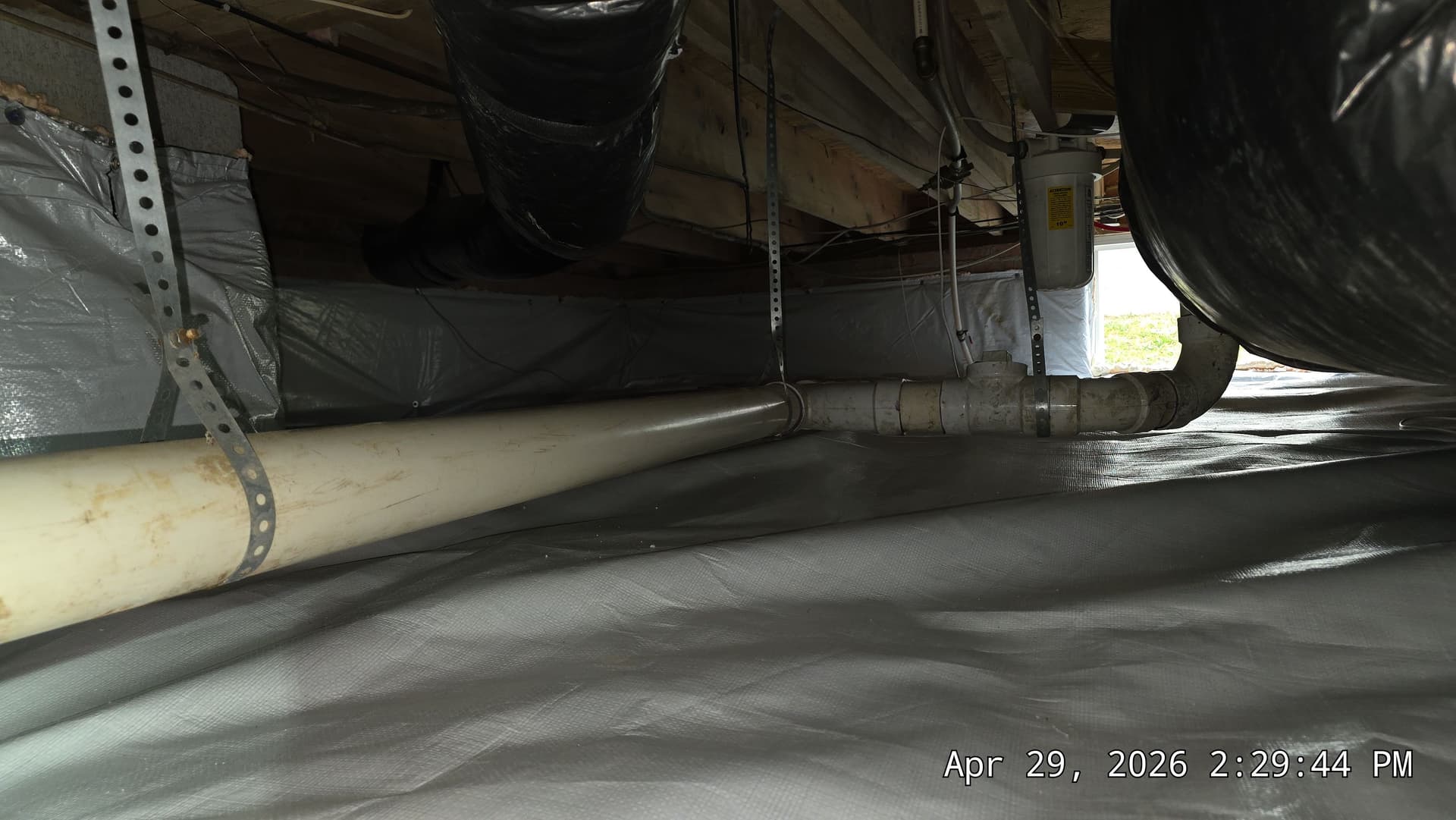
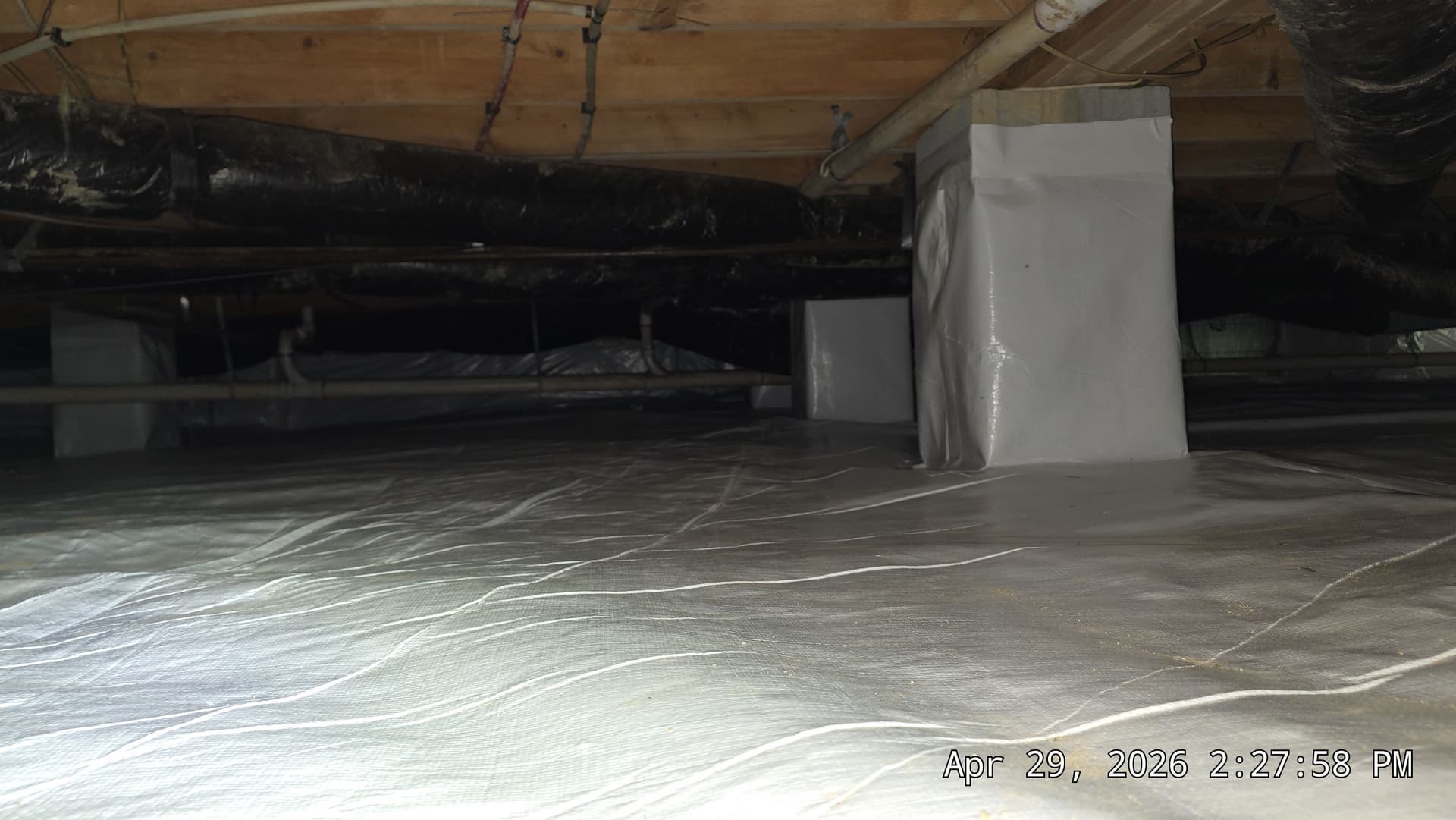
Here's what we put together for this one. We laid a 20 mil woven vapor barrier across the entire floor and up the foundation walls, giving the ground a solid, durable seal that won't tear or shift over time. This isn't the thin plastic sheeting you find at a hardware store - a 20 mil woven barrier is built to last and hold up to foot traffic if someone ever needs to get under there for maintenance.
We also wrapped the piers and ran the Insul-Barrier foundation blanket along the walls. That combination helps cut down on thermal transfer through the foundation, which keeps the conditioned air in your home from working harder than it needs to. Every pier is wrapped tight, every wall is covered - no gaps left for moisture to sneak back in.
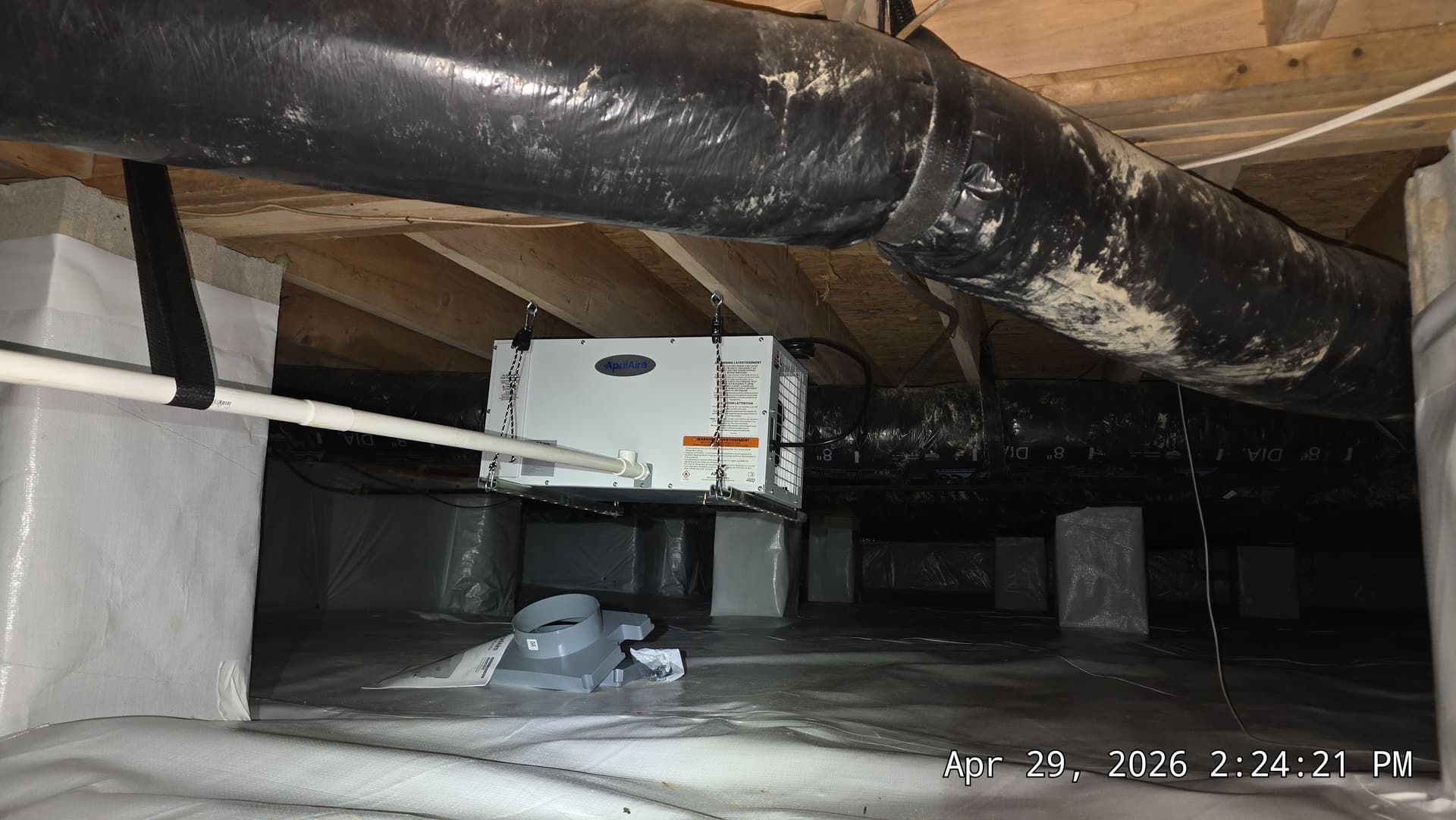
On top of all that, we hung an Aprilaire E70 dehumidifier. Even with a solid vapor barrier in place, humidity can still find its way into a sealed crawl space through the air. The E70 handles that - it actively pulls moisture out of the air and keeps relative humidity at a level where mold and wood rot just can't get a foothold. It's a critical piece of a complete crawl space encapsulation system, and it's one we trust on jobs like this.
If your crawl space stays damp, smells musty, or you honestly have no idea what's going on under your home - that's worth paying attention to. Problems down there don't fix themselves, and the longer moisture sits, the more damage it quietly does to your structure, your air quality, and your wallet.