Crawl Space Encapsulation with 20 Mil Vapor Barrier in Durham
Most homeowners never think about what's happening under their house. But the crawl space is one of the biggest sources of moisture problems, energy loss, and air quality issues in a home. When ground moisture has nowhere to go, it works its way up - into your floors, your walls, and eventually the air you're breathing every day.
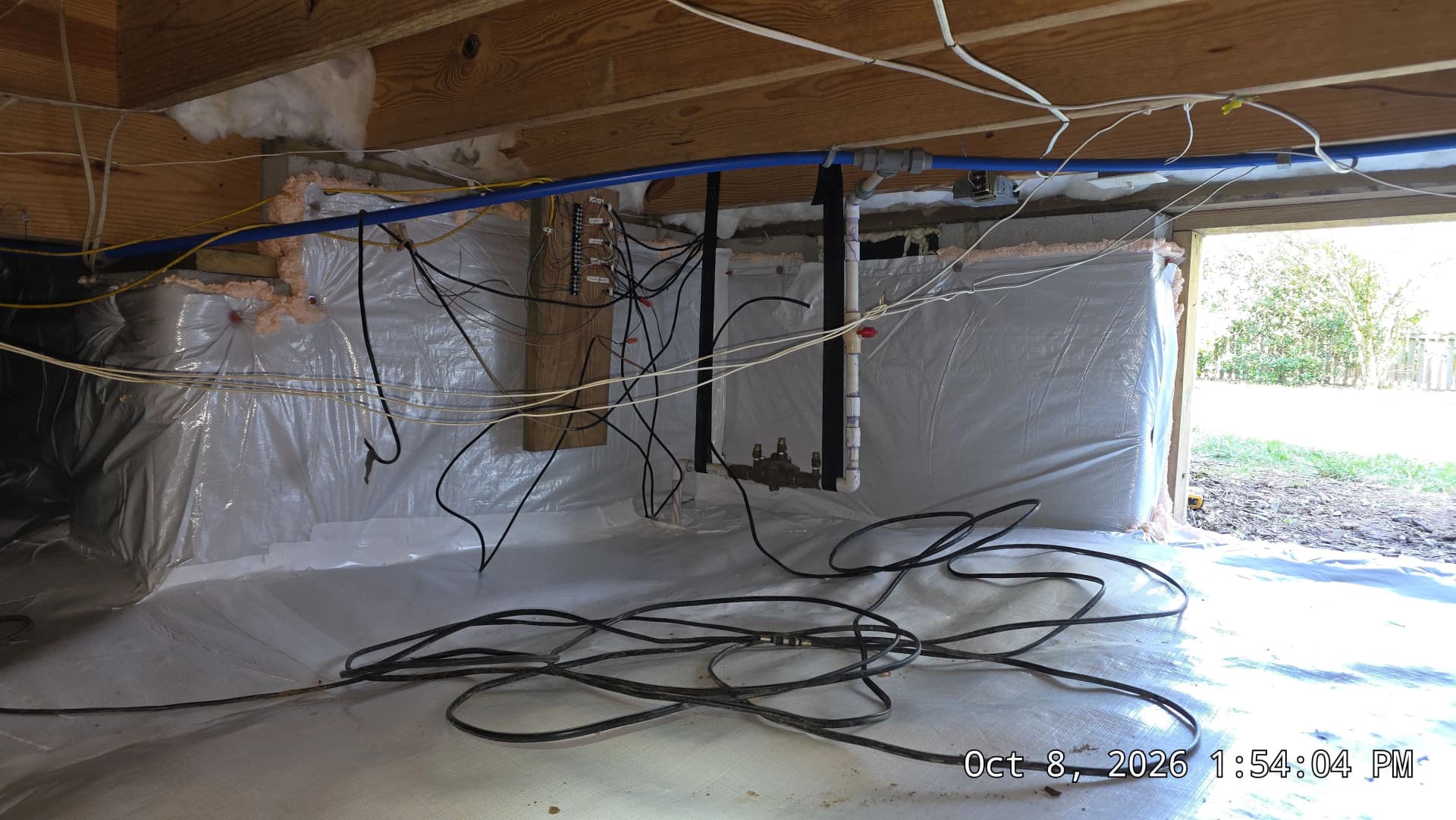
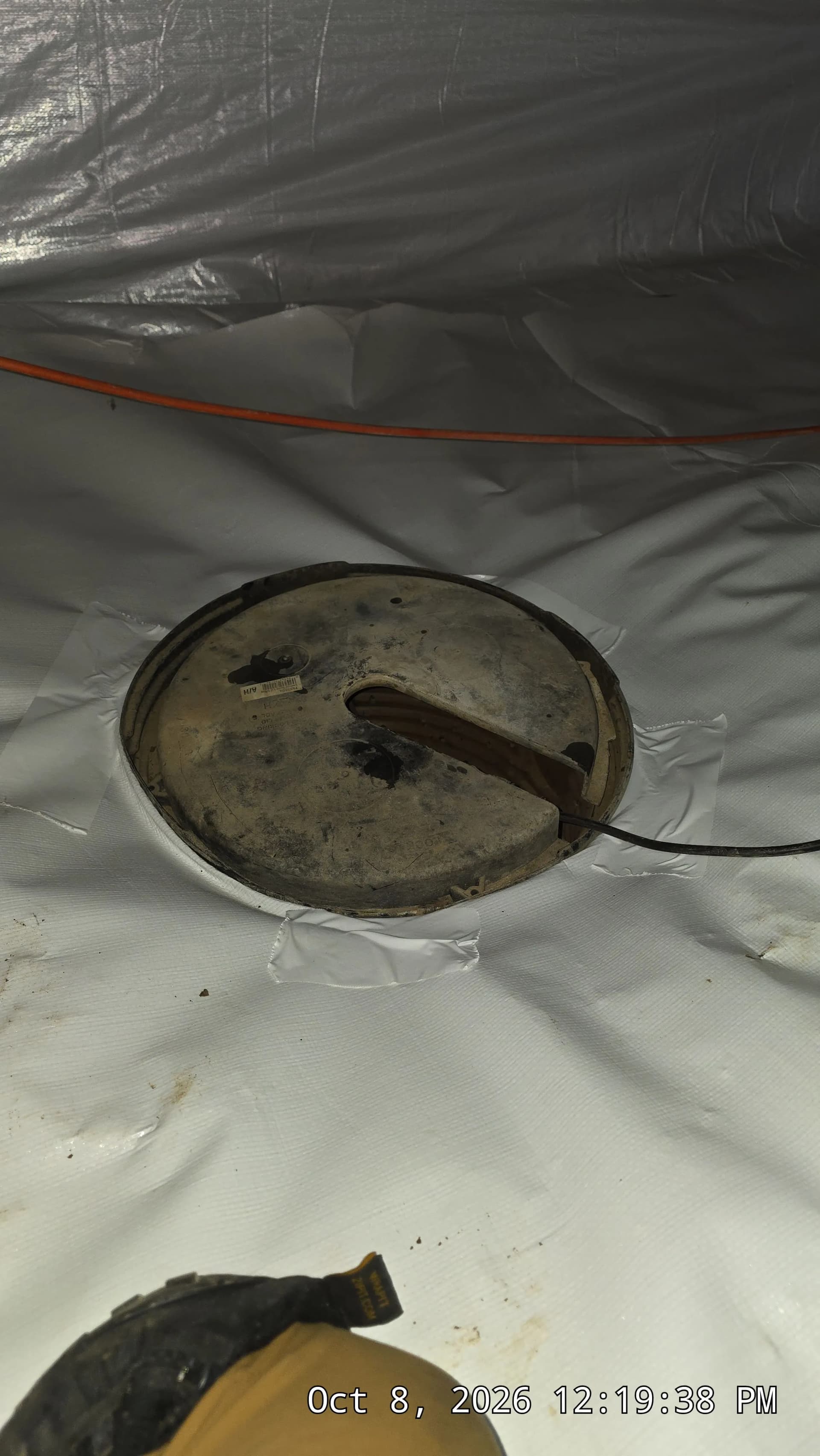
We just wrapped up a full crawl space encapsulation in Durham, and this one had everything we typically see in homes around here. The space was open to ground moisture, and without a proper barrier system in place, that kind of exposure adds up fast. Damp wood, musty smells, and a heating and cooling system working harder than it should - those are the signs.
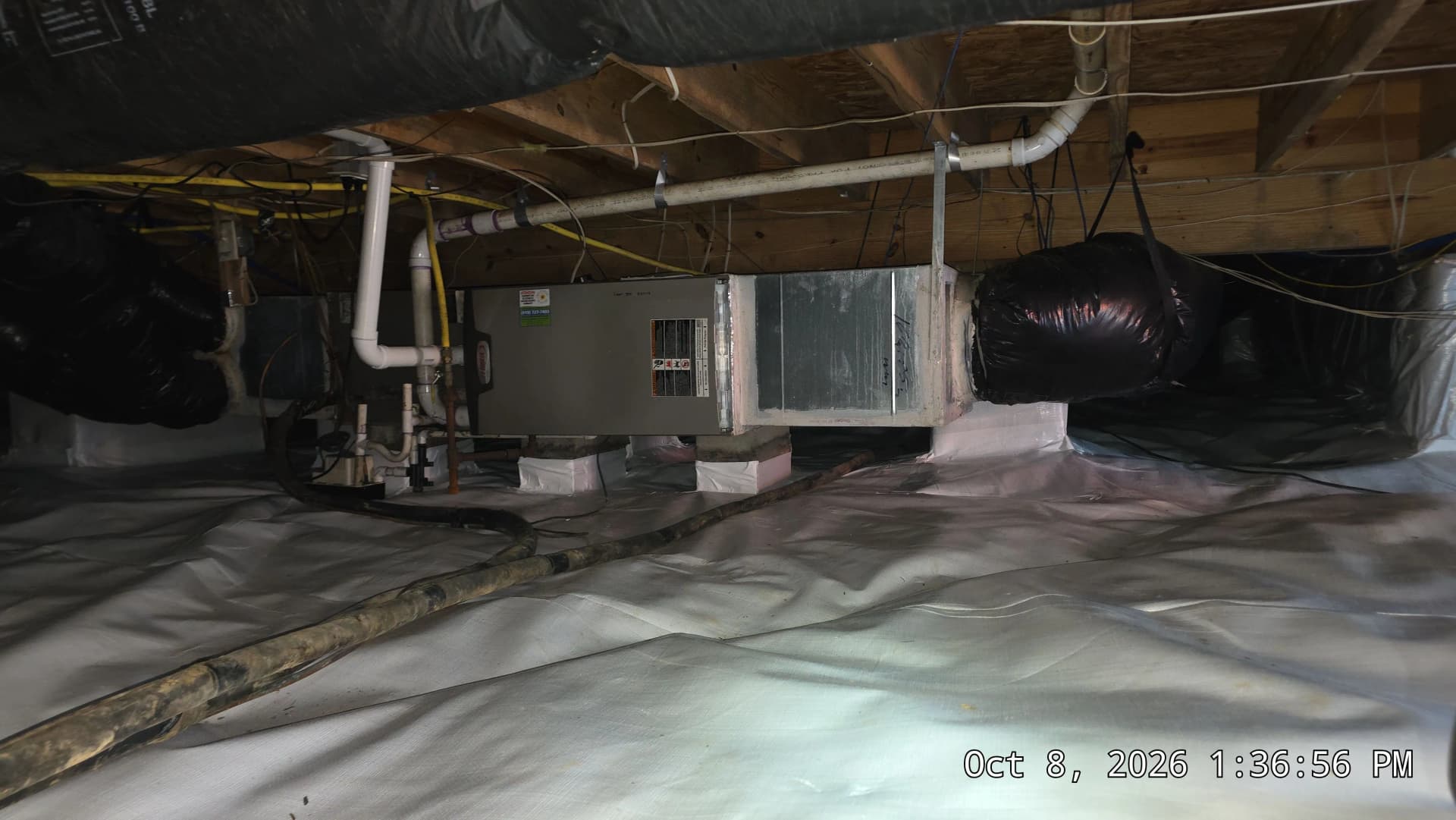
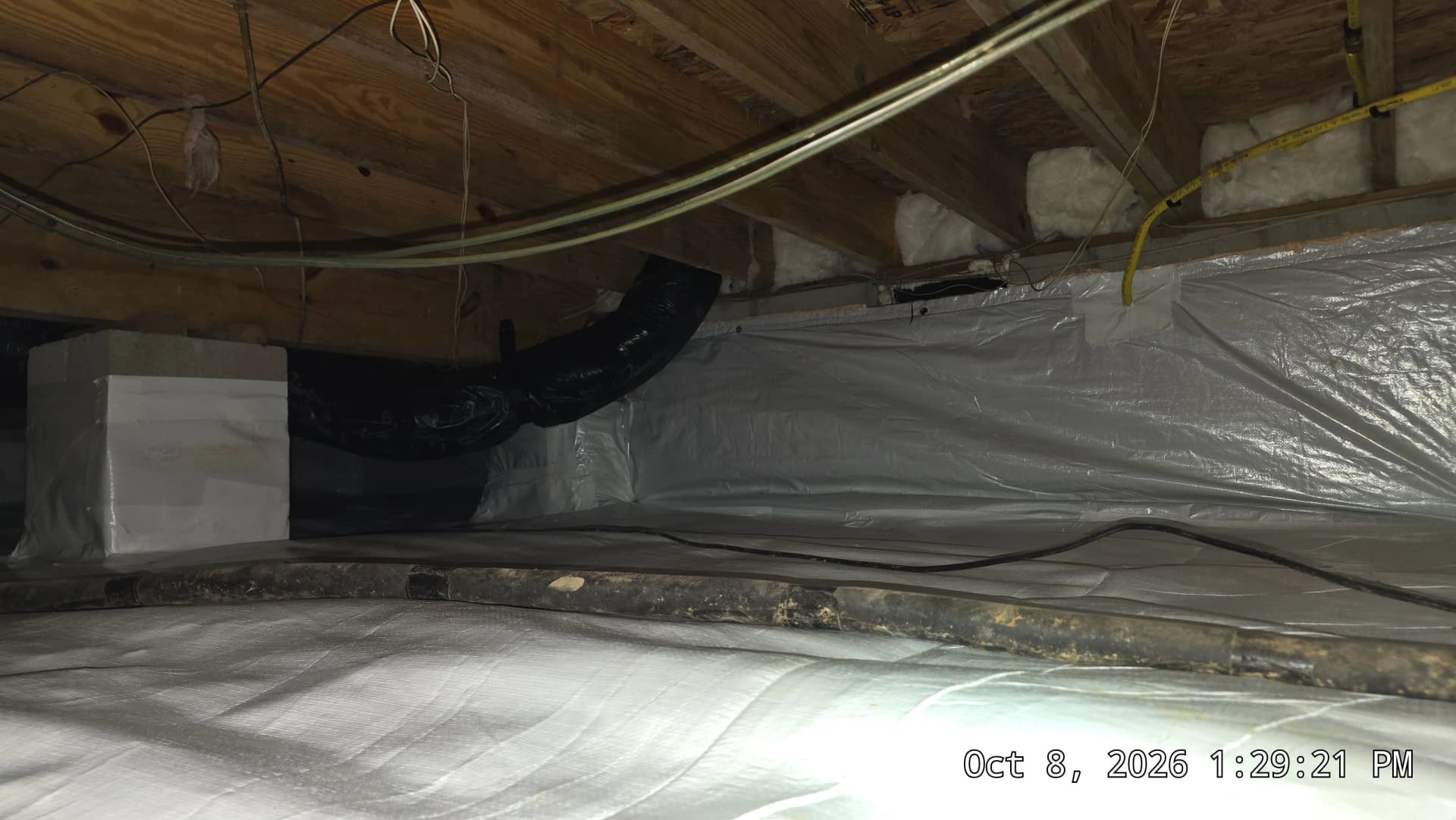
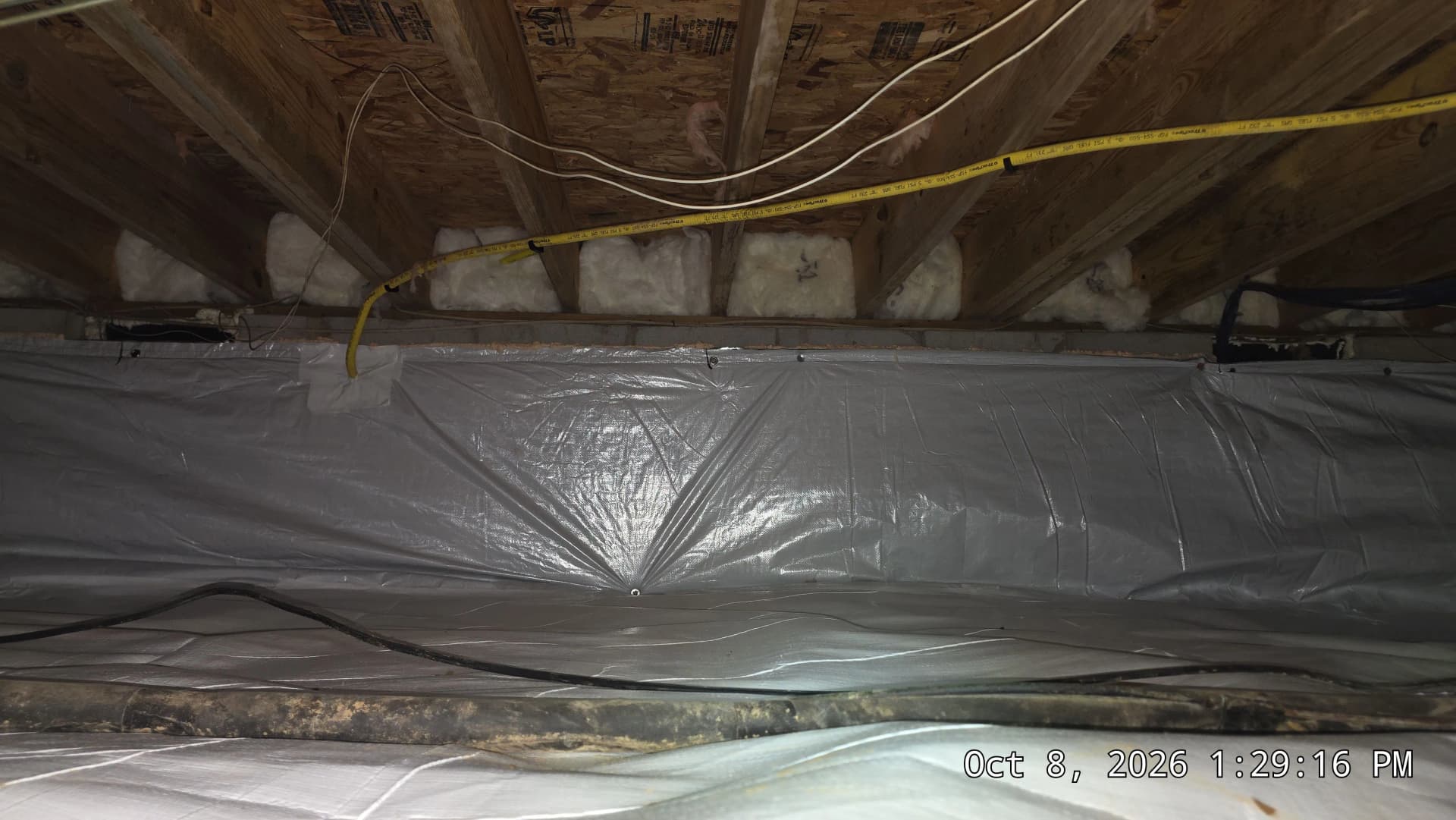
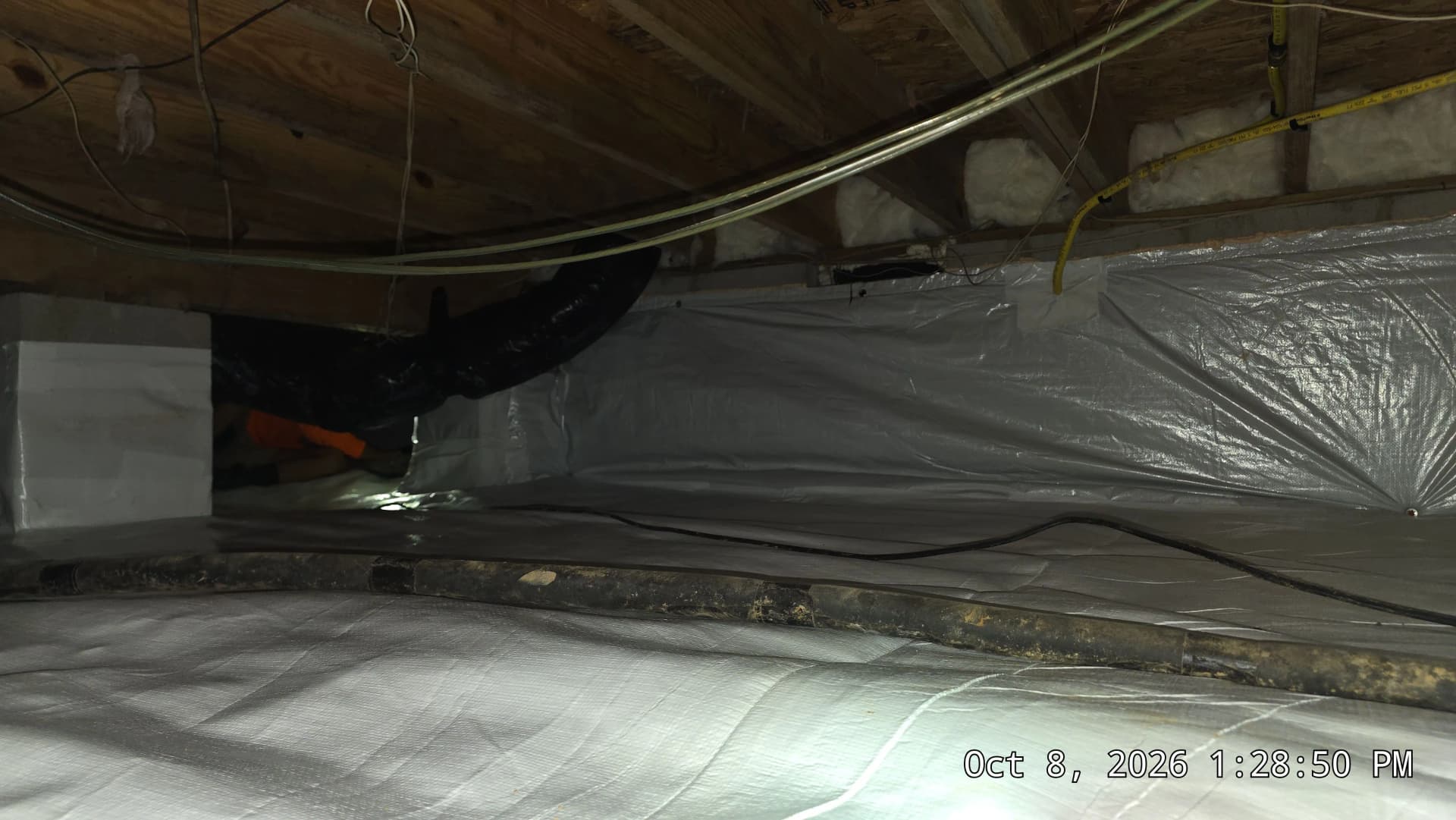
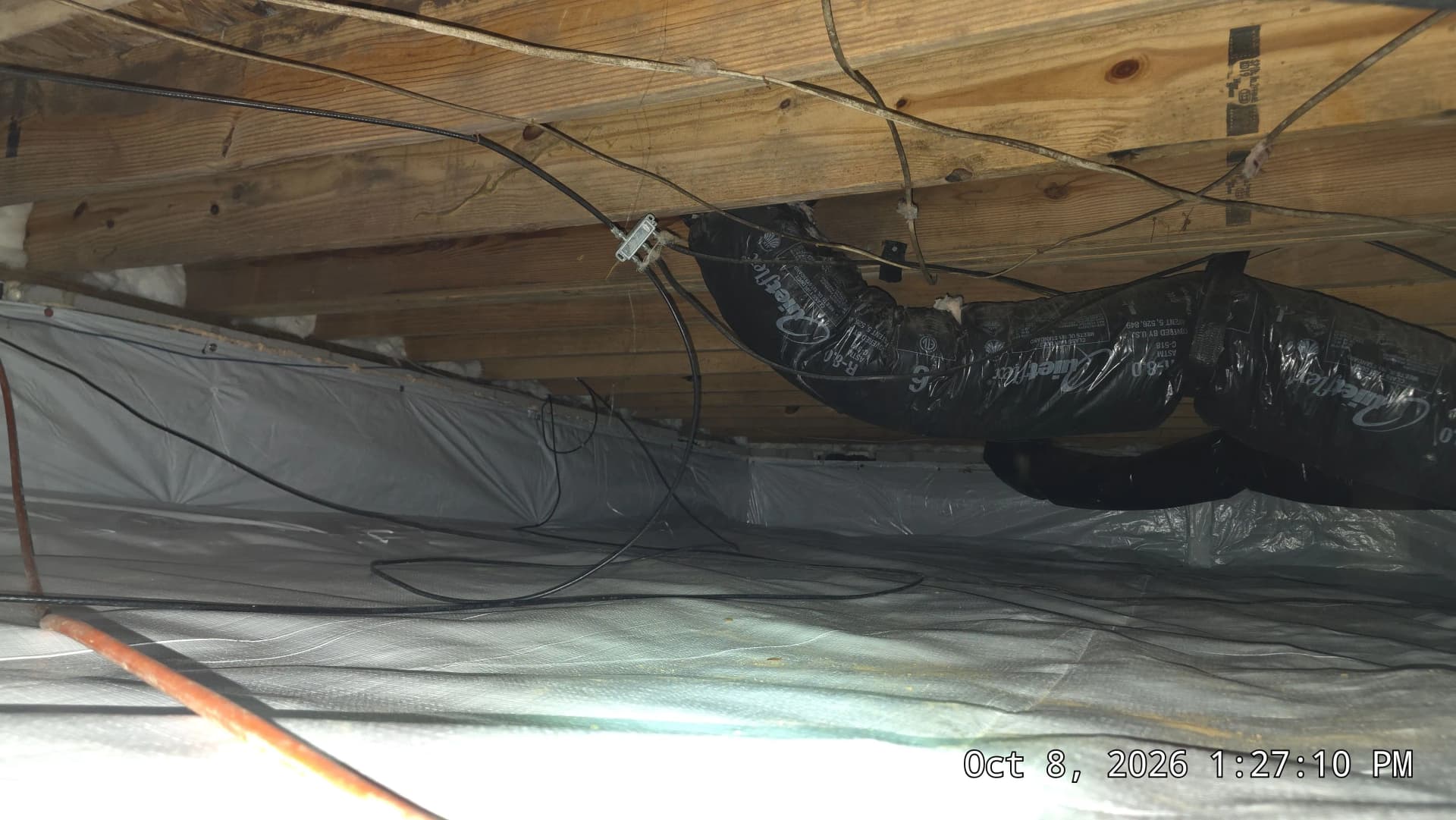
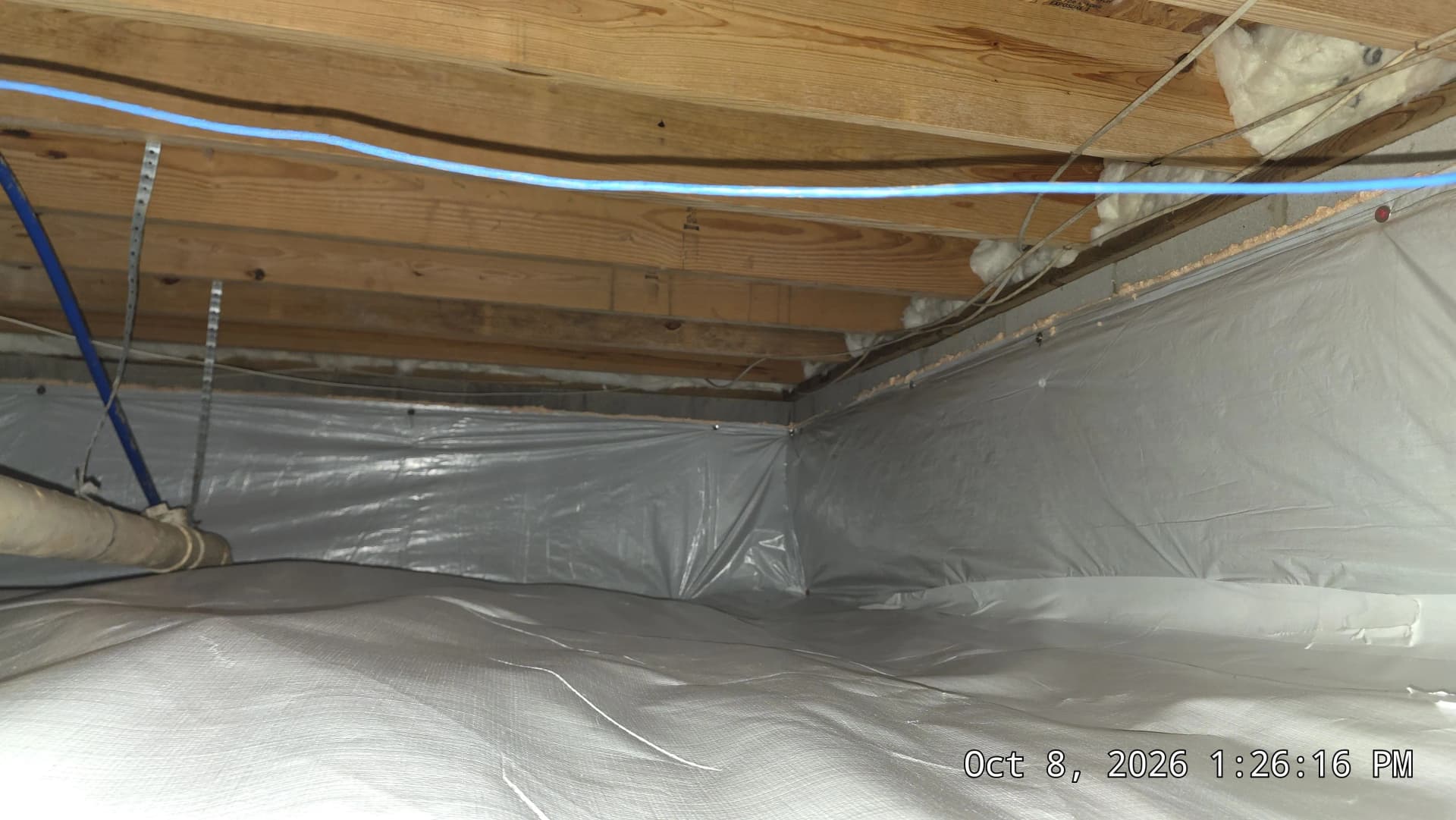
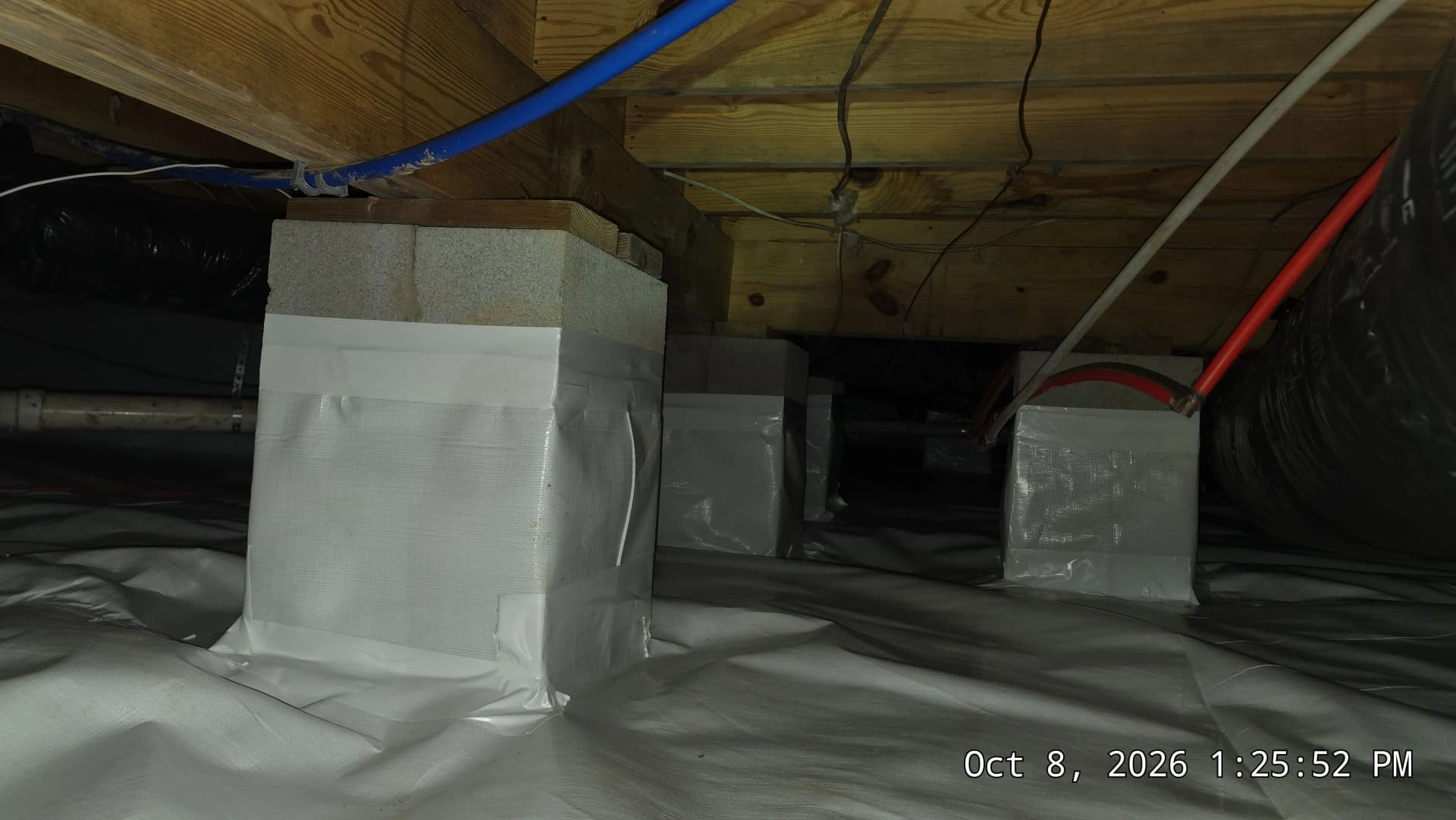
For this job, we installed a 20 mil vapor barrier across the floor and up the foundation walls, and paired it with an insul-barrier foundation blanket. The 20 mil thickness is worth noting. Thinner barriers tear easily and don't hold up long-term. Going with a heavier-duty liner means it actually stays in place and does its job for years. The pier columns are also wrapped and sealed, which a lot of installs skip - but that's how moisture sneaks back in.
The barrier we use isn't just about blocking moisture. It also helps the home hold conditioned air better, which takes some of the load off the HVAC system. If your crawl space has a furnace or air handler sitting in it like this one did, keeping that environment dry and controlled matters a lot for efficiency and equipment longevity.
A damp or musty crawl space isn't something to put off. It gets worse over time, and the damage it causes - to wood structure, air quality, and energy bills - is slow but real. Crawl space encapsulation is one of the most practical investments you can make in a home, and doing it right the first time makes all the difference.