Crawl Space Encapsulation with 20 Mil Vapor Barrier in Rougemont
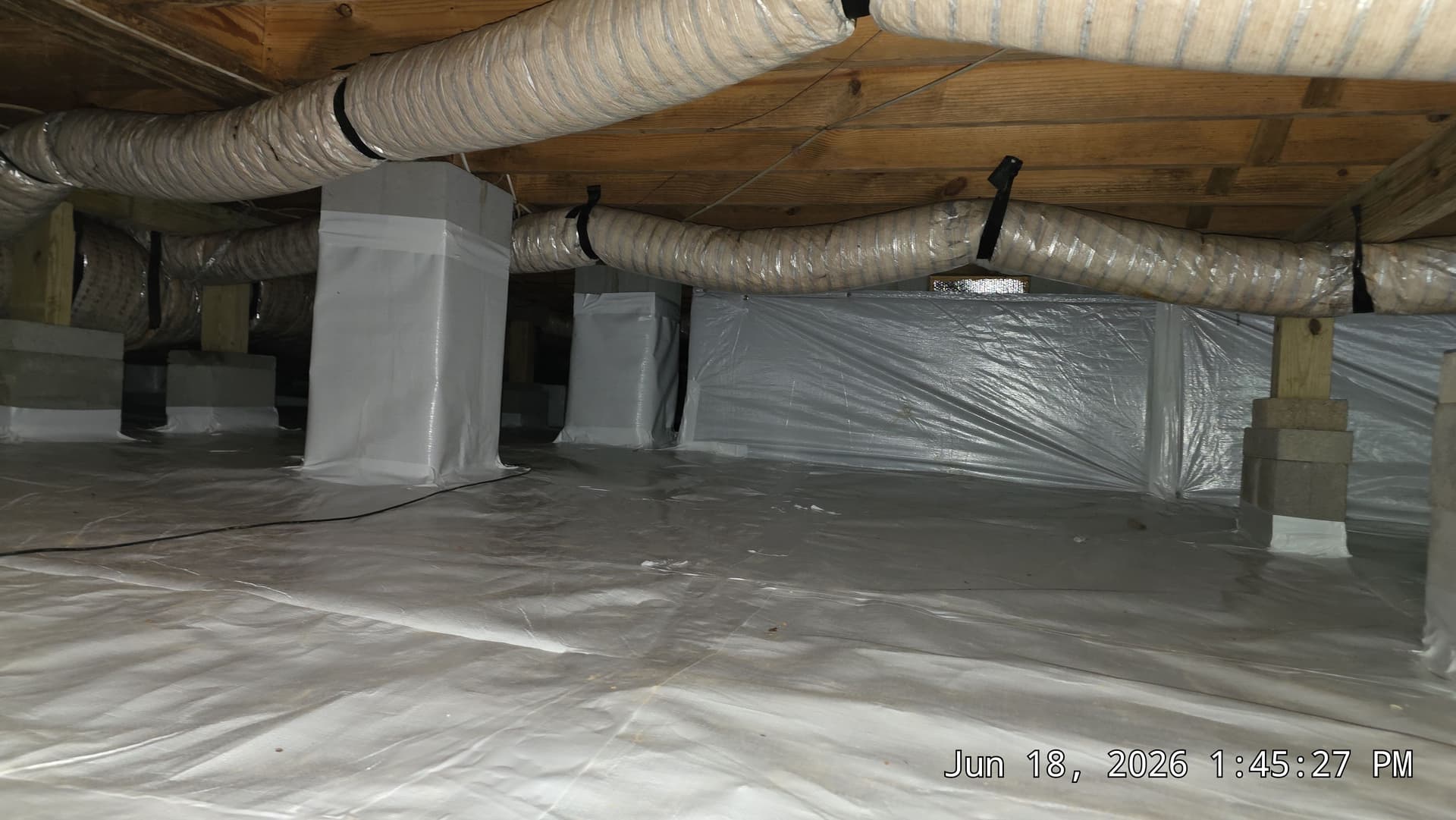
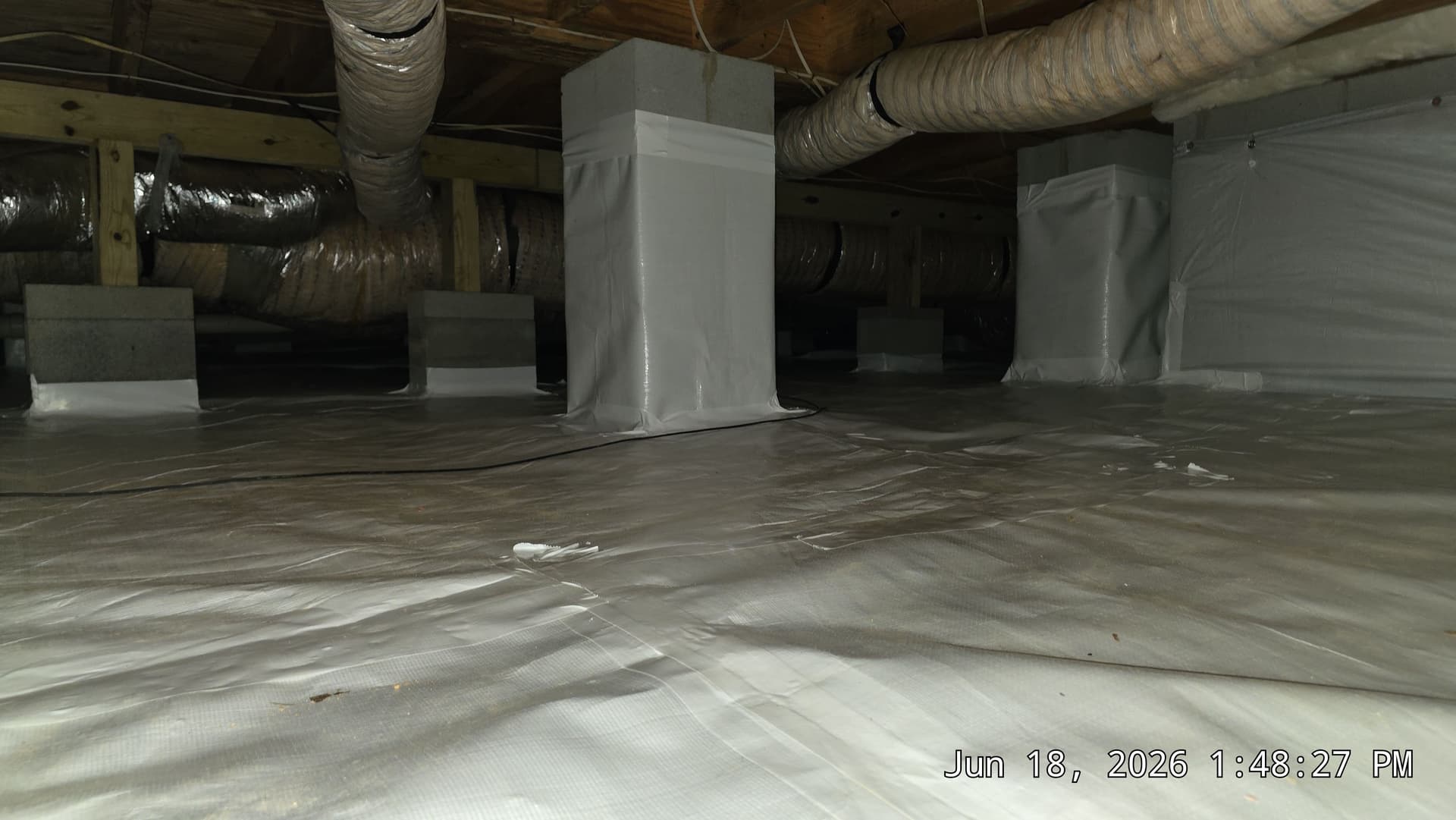
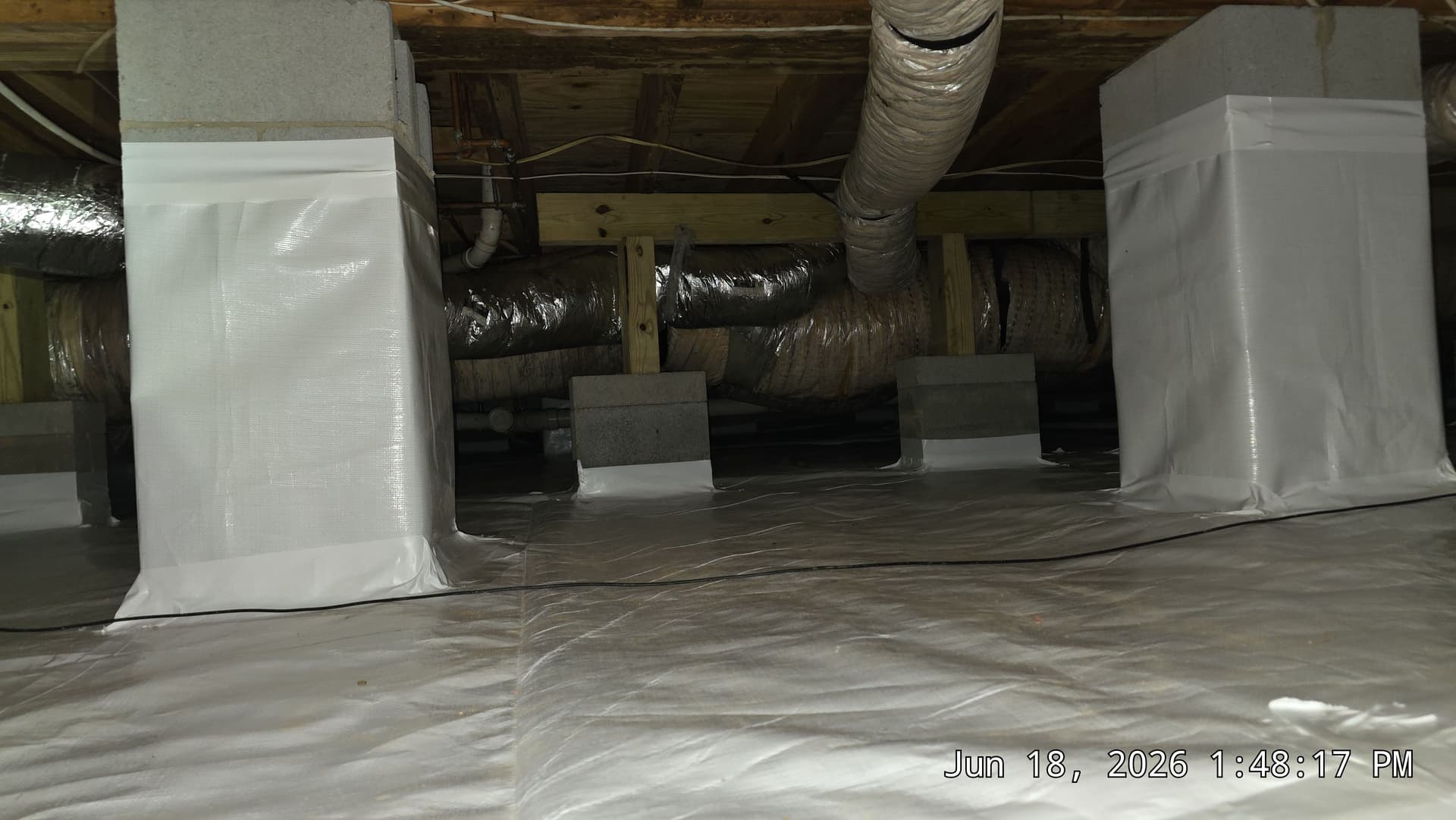
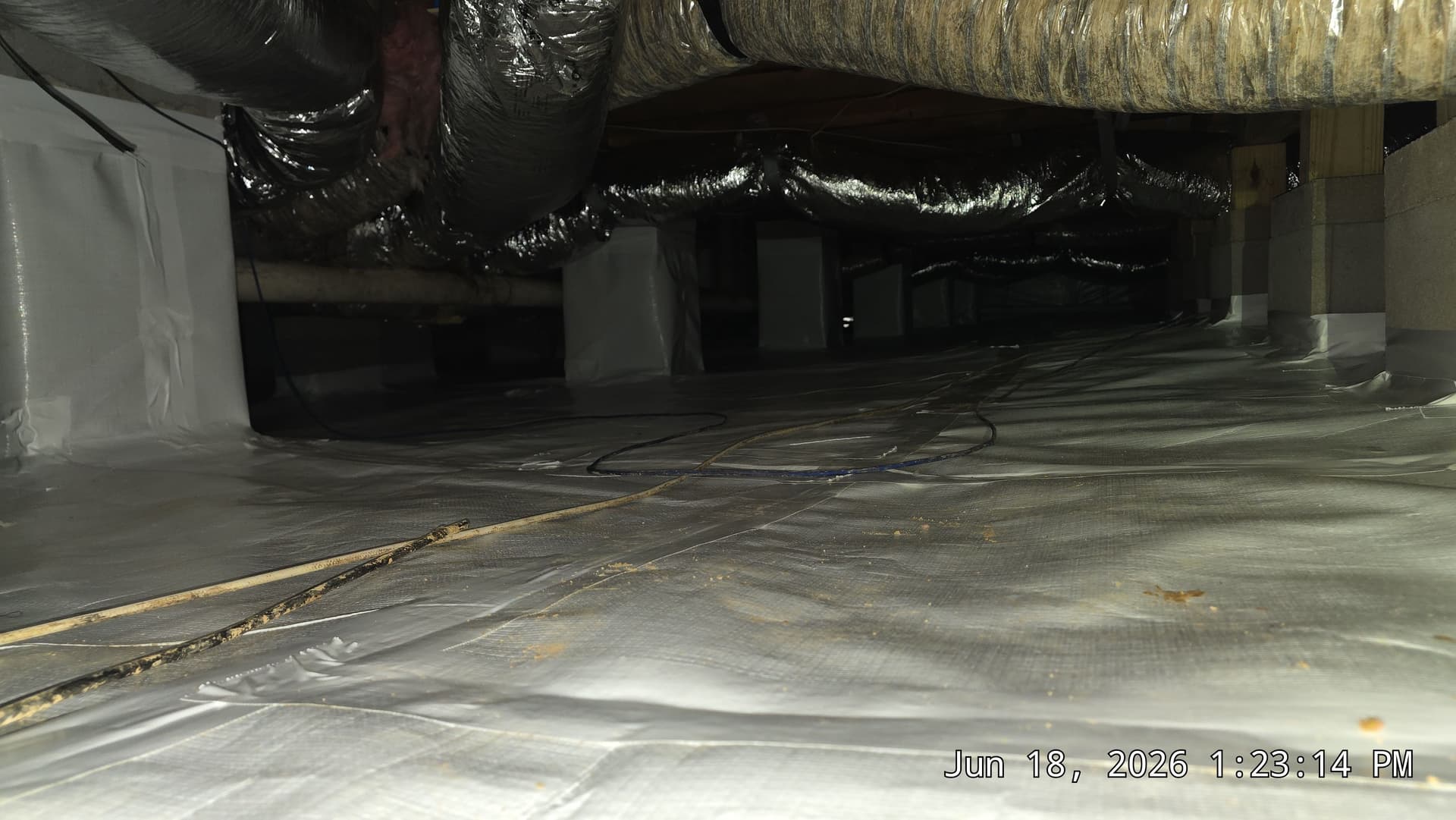
Most homeowners never think about what's happening under their house - until they notice musty smells, cold floors, or energy bills that just keep climbing. The crawl space is usually ground zero for those problems. Moisture moves up from the soil, works its way into the wood framing, and slowly does damage you can't see until it's a much bigger issue.
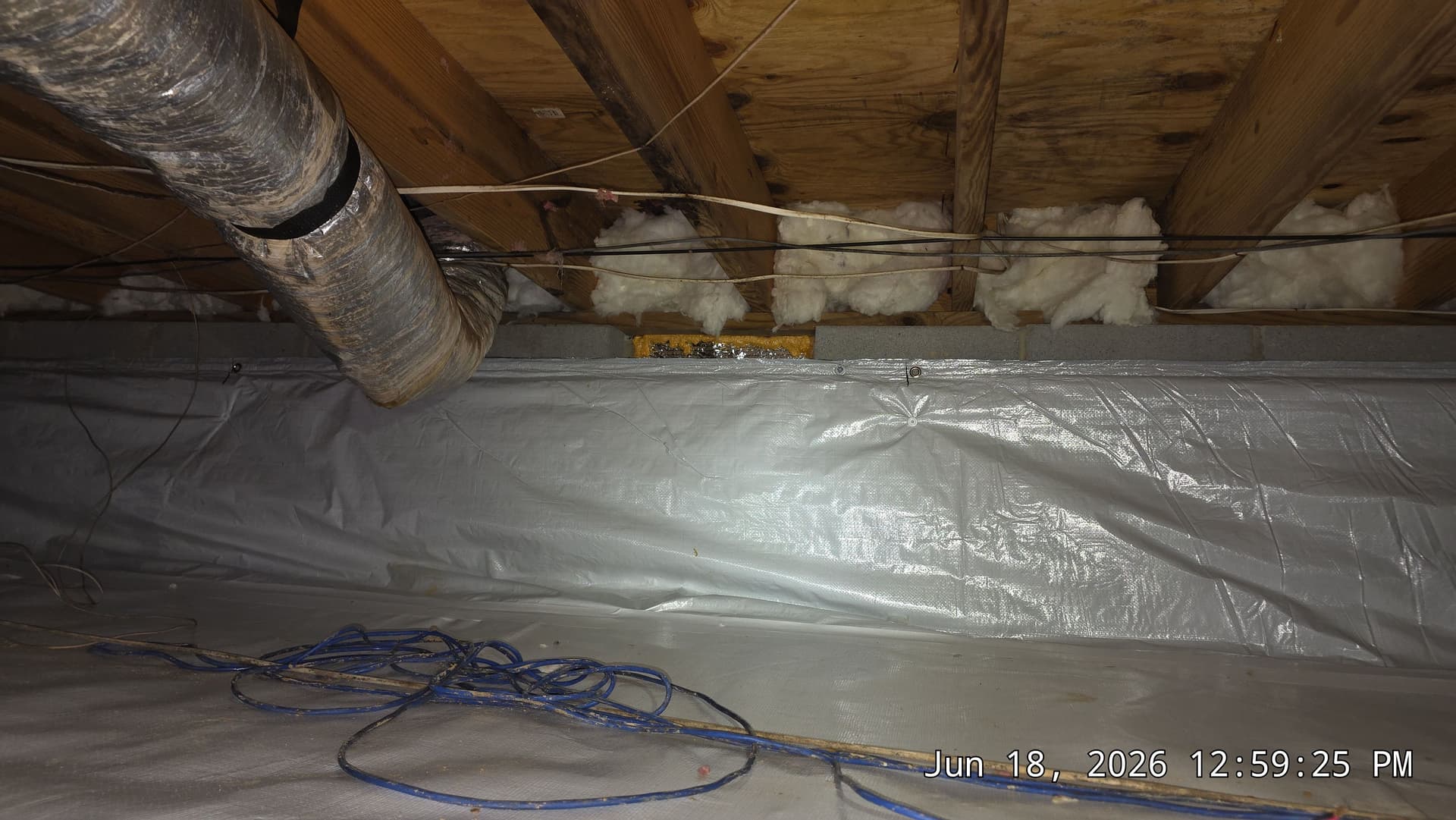
Here's what we were working with on this one in Rougemont. The space needed full coverage - floor, walls, piers, all of it. We laid down a 20 mil woven vapor barrier across the entire crawl space floor. That thickness matters. Thinner barriers tear, shift, and fail. A 20 mil woven barrier is tough, puncture-resistant, and built to stay put for the long haul.
We also wrapped the foundation walls and piers with an insul-barrier foundation blanket. This adds a layer of thermal protection that helps cut down on energy loss - your HVAC system isn't fighting as hard when the crawl space is properly sealed off from outside air and ground moisture. The piers are wrapped clean from floor to joist, which keeps the whole system working together.
That combination - heavy-duty vapor barrier on the ground plus insulation on the foundation walls - is what a proper crawl space encapsulation looks like. It's not just about keeping water out. It's about controlling the environment under your home so it stops working against you and starts protecting your investment instead.
If your crawl space has damp air, a musty smell coming into the living area, or you just don't know what's down there - it's worth getting a look. Moisture problems rarely fix themselves.