Full Crawl Space Encapsulation with Dehumidifier Install in Durham
A damp, musty crawl space is one of those problems that's easy to ignore - until it isn't. Moisture buildup under your home can quietly rot structural wood, drive up your energy bills, and push mold spores right into your living space. This Durham home had exactly that kind of situation going on, and we came in with a full encapsulation setup to fix it the right way.
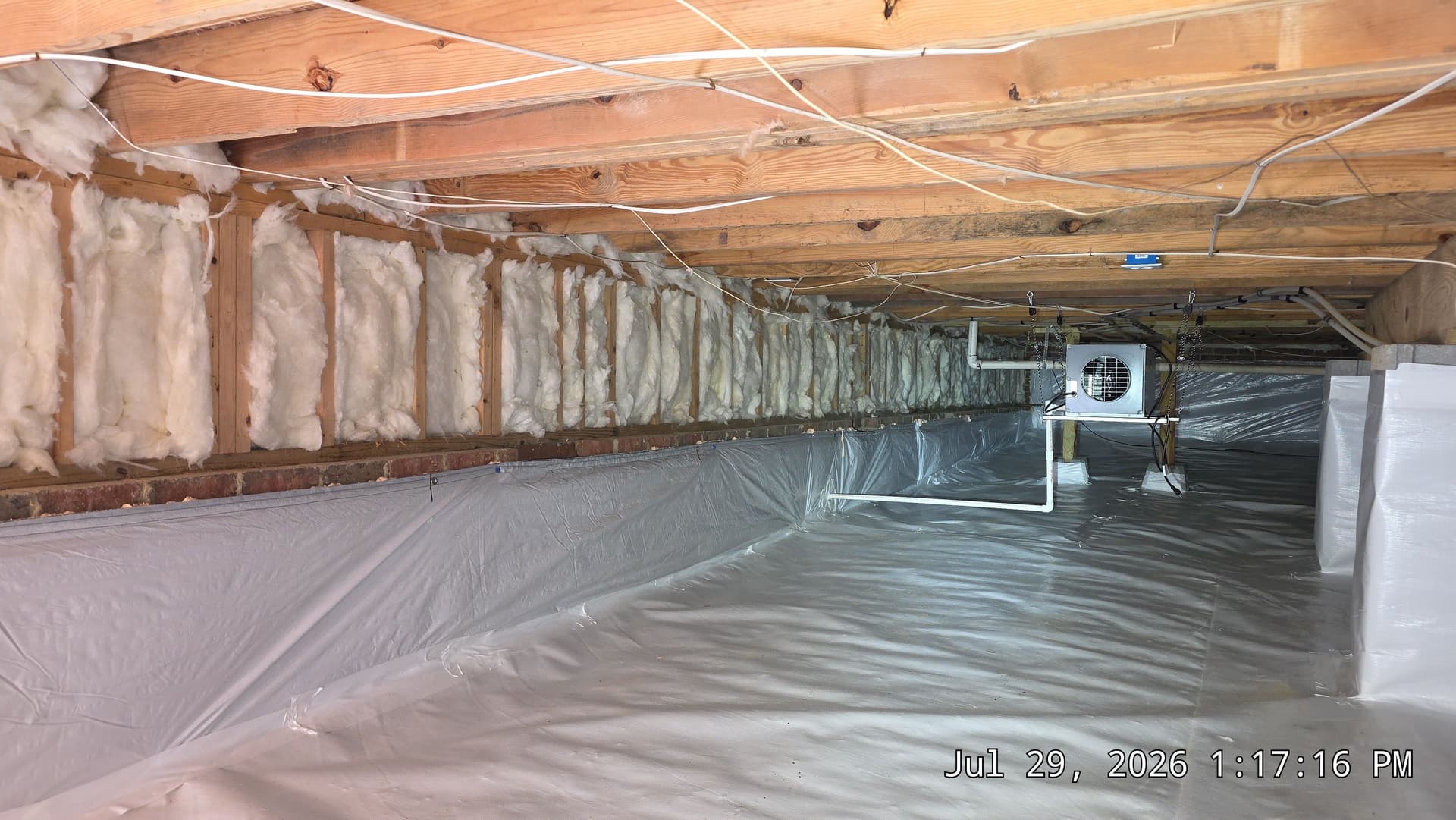
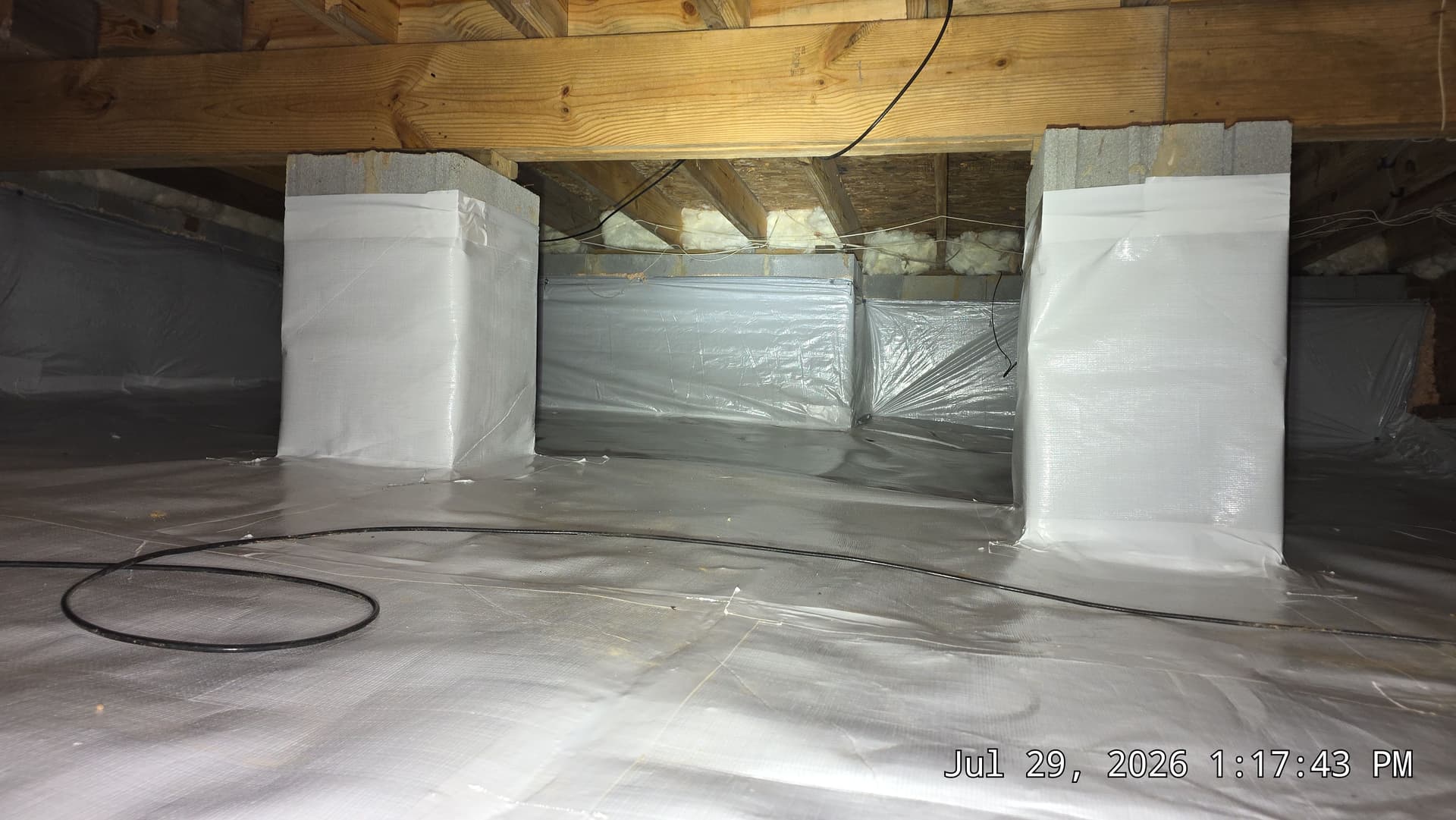
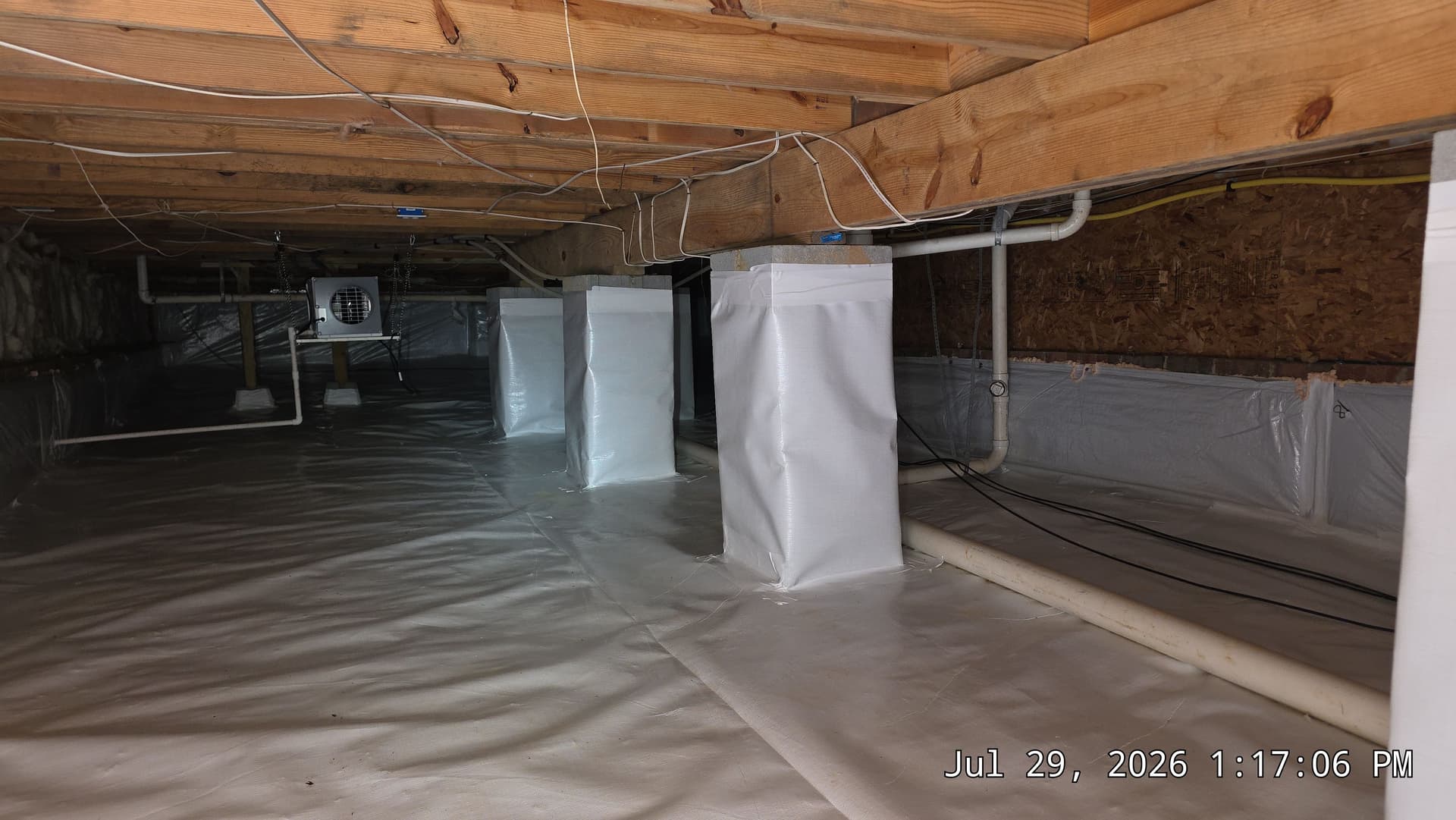
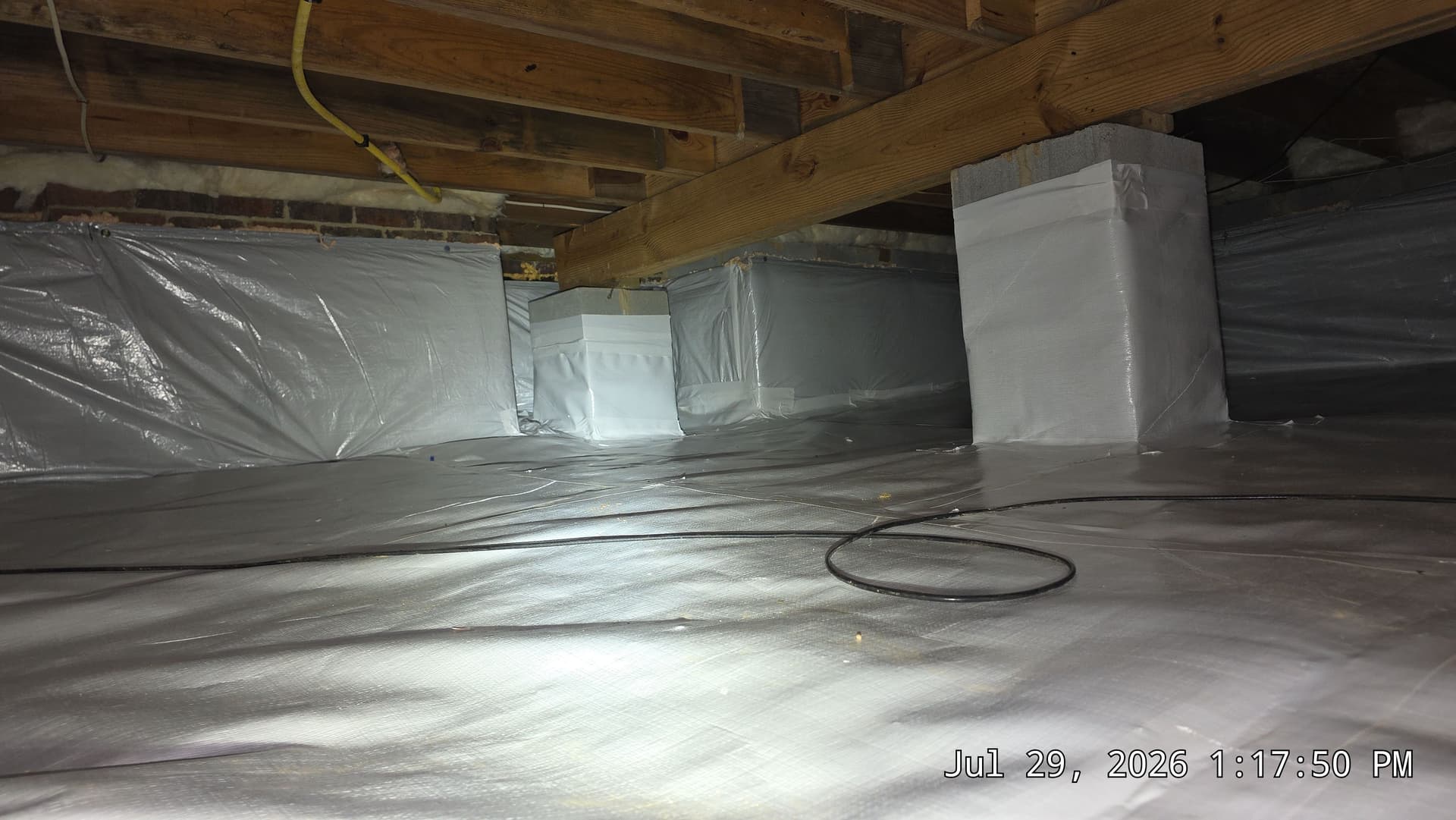
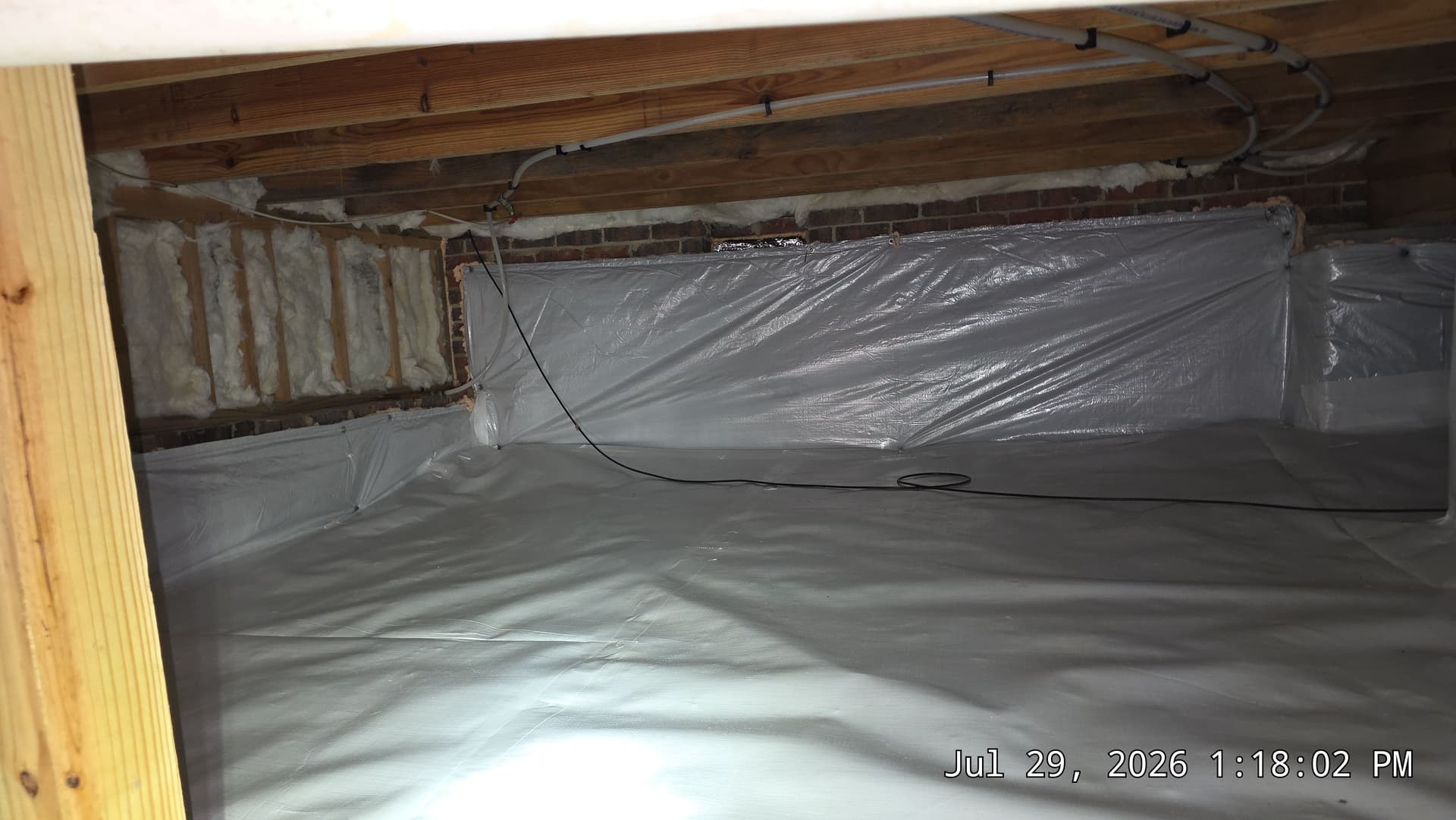
We started with an Insul-Barrier foundation blanket along the perimeter walls. This stuff isn't just a liner - it's a proper thermal and moisture barrier that works together with everything else in the system. The vapor barrier was then laid across the entire ground surface, wrapping up and around the piers to close off every pathway moisture could sneak through. It's one of those details that separates a real encapsulation from a quick-fix tarp job.
The insulation between the floor joists was addressed as well. Getting that right matters because it keeps conditioned air where it belongs and stops the temperature swings that contribute to condensation forming in the first place. When insulation and encapsulation work together, the whole system performs better.
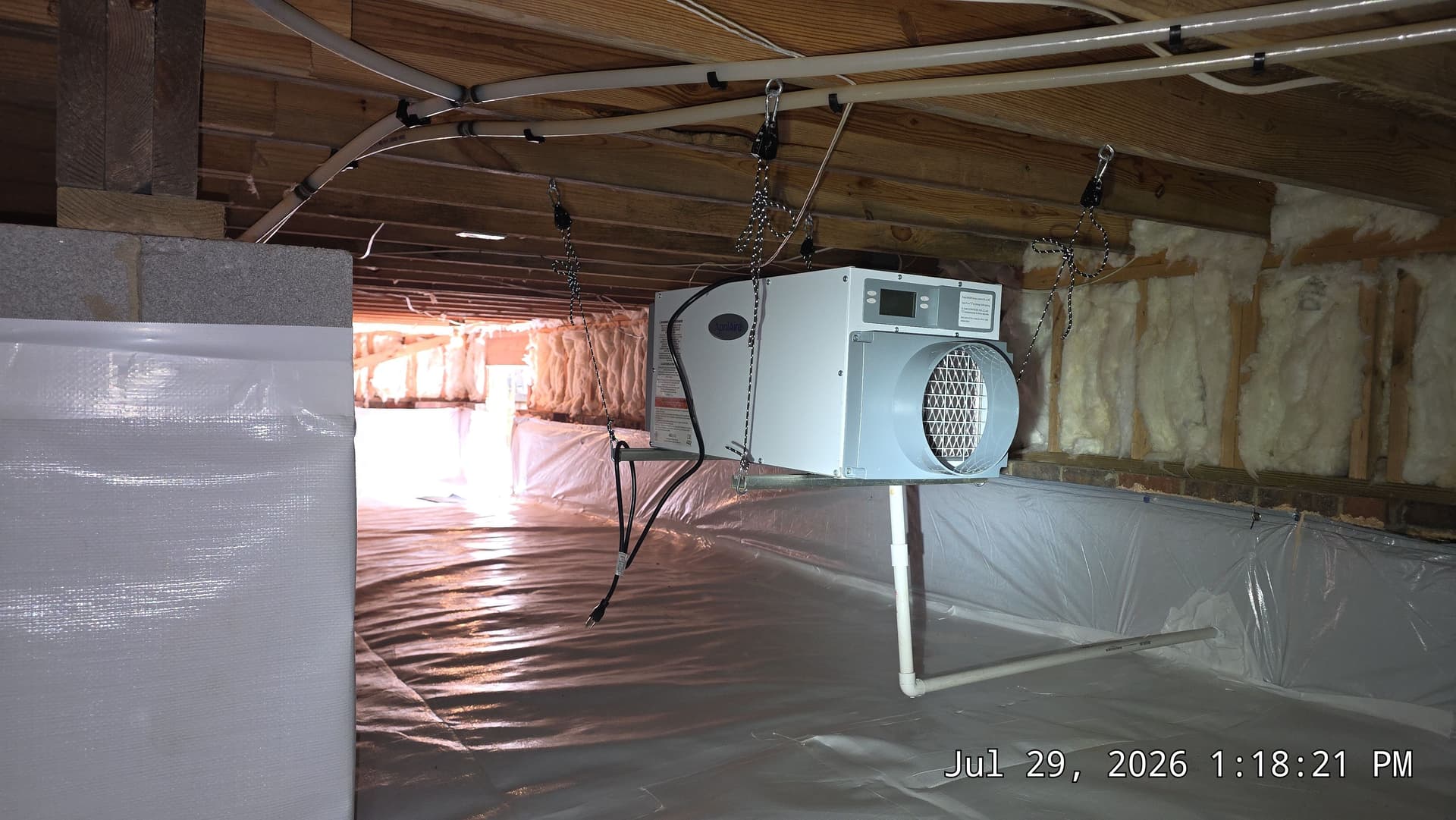
The Aprilaire E70 dehumidifier was hung from the joists and plumbed to drain on its own - no buckets, no manual intervention needed. It runs continuously and keeps relative humidity in check around the clock. For a region like Durham where summer humidity gets heavy, that kind of active moisture management isn't optional, it's necessary. The encapsulation alone slows moisture entry, but the dehumidifier is what keeps the air inside the space consistently dry.
The end result is a crawl space that's clean, dry, and actually doing its job. No more musty smell creeping into the house. No more worrying about what's happening under the floor. If your crawl space stays wet or smells off, this is the kind of setup that solves it for the long haul.