What Crawl Space Moisture Really Looks Like Before It Gets Worse
Most homeowners never see what's going on under their house. Out of sight, out of mind - until something starts going wrong upstairs. Musty smells, soft spots in the floor, higher humidity inside the home. By the time you notice those signs, the crawl space has usually been dealing with a moisture problem for a while.
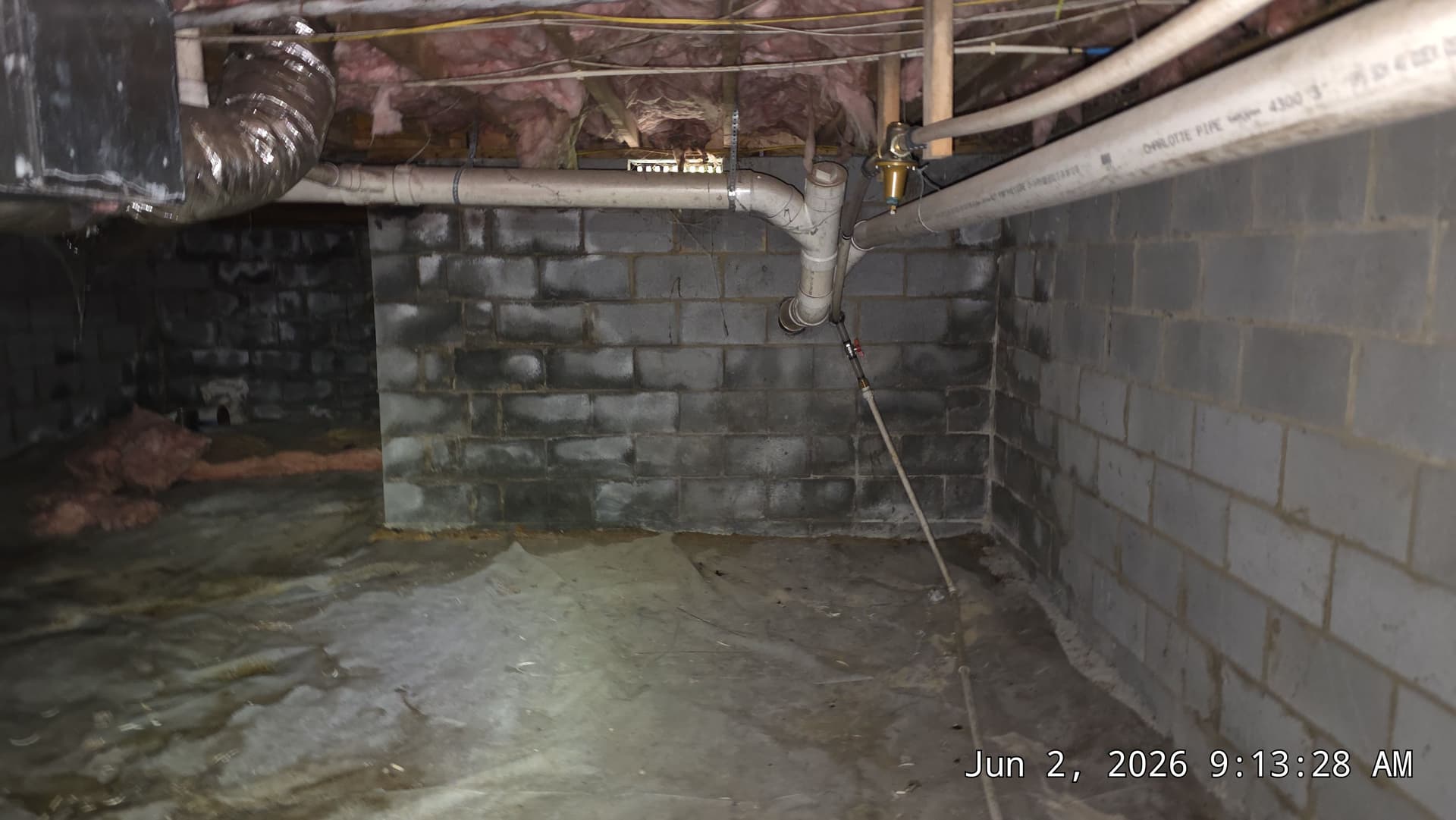
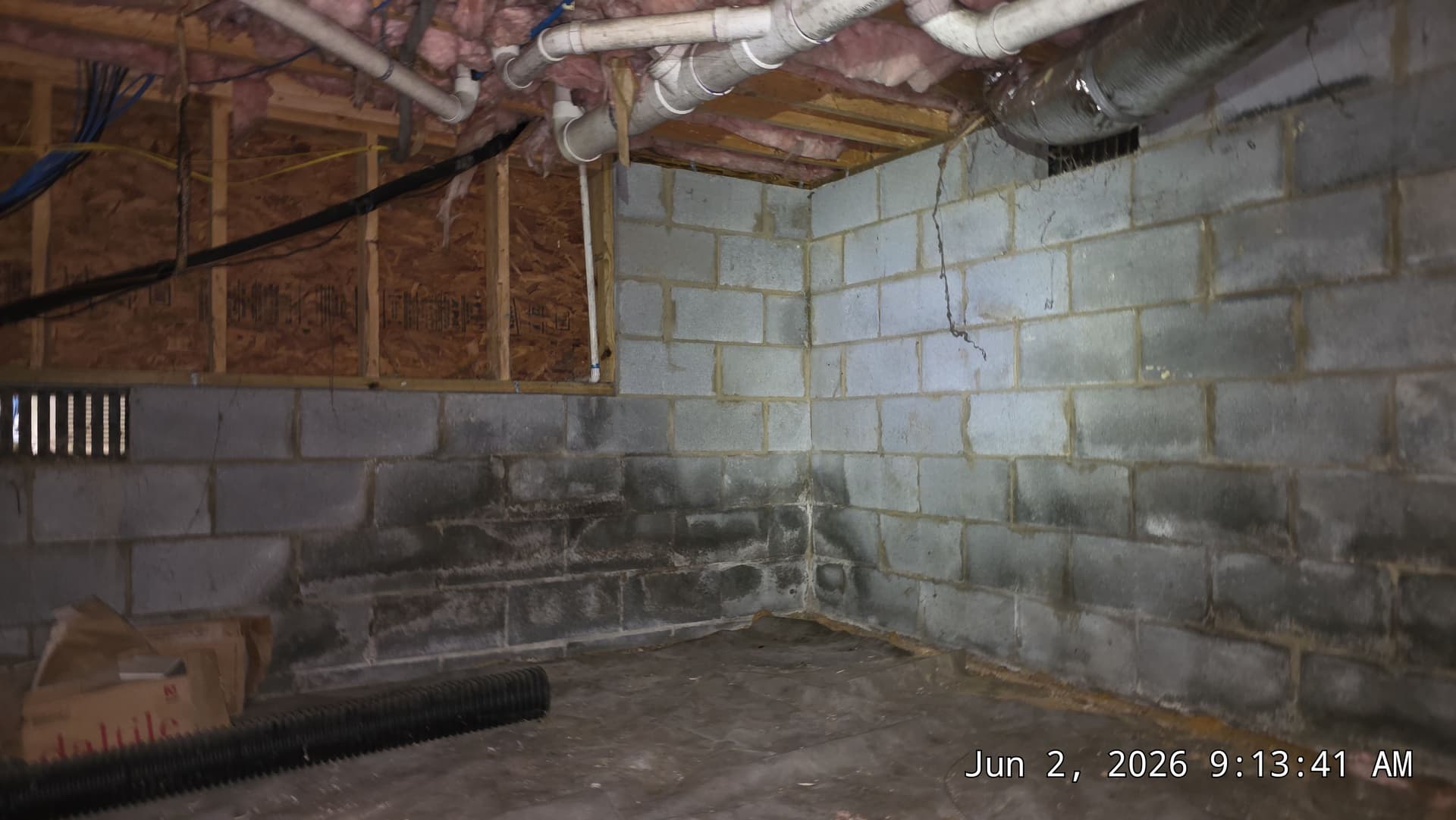
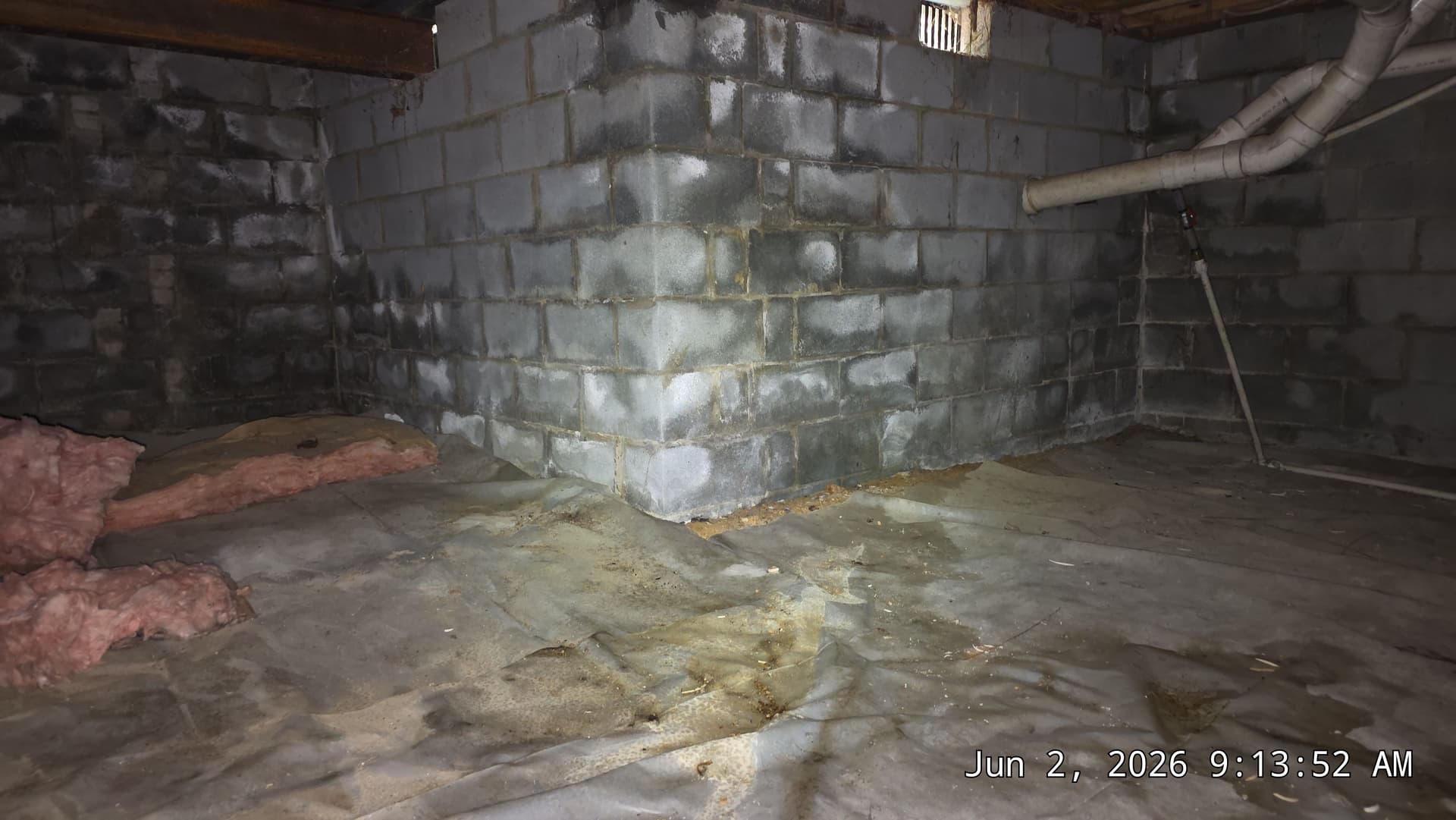
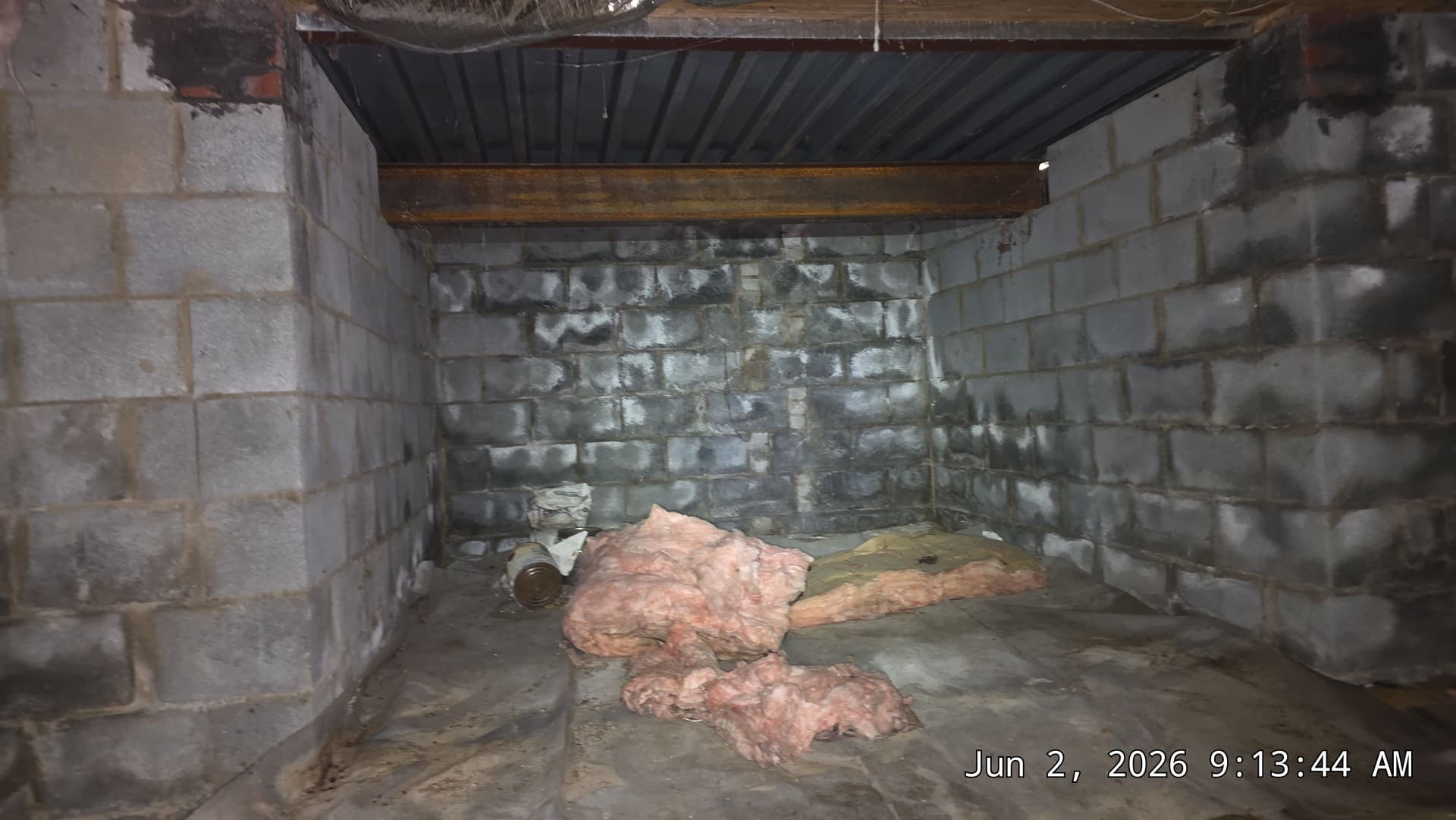
Here's what we were working with. The block foundation walls are dark and wet-looking, with that white, chalky residue streaked across the surface. That's efflorescence - a sign that water is actively pushing through the concrete block and depositing minerals on its way in. It's not cosmetic. It means moisture is moving through the wall constantly, and the humidity in that space is climbing because of it.
You can also see that the existing insulation has already taken a hit. Batts of pink fiberglass are sitting on the floor, fallen and saturated. Once insulation gets wet, it loses its effectiveness and becomes a prime spot for mold to take hold. That's how a moisture issue turns into a mold issue, and how a crawl space problem becomes a whole-home problem.
This is exactly the kind of situation where crawl space encapsulation and a proper vapor barrier make a real difference. Sealing the space - walls, floor, all of it - cuts off the moisture pathway so it stops cycling through the structure. Pair that with professional mold remediation to address anything that's already grown, and you're dealing with the root cause, not just patching over symptoms.
Getting eyes on your crawl space before things get this far along is the best move a homeowner can make. Catching it early means less damage, less cost, and a healthier home from the ground up.