Your Crawl Space Can Look Fine Right Now and Still Have a Serious Problem
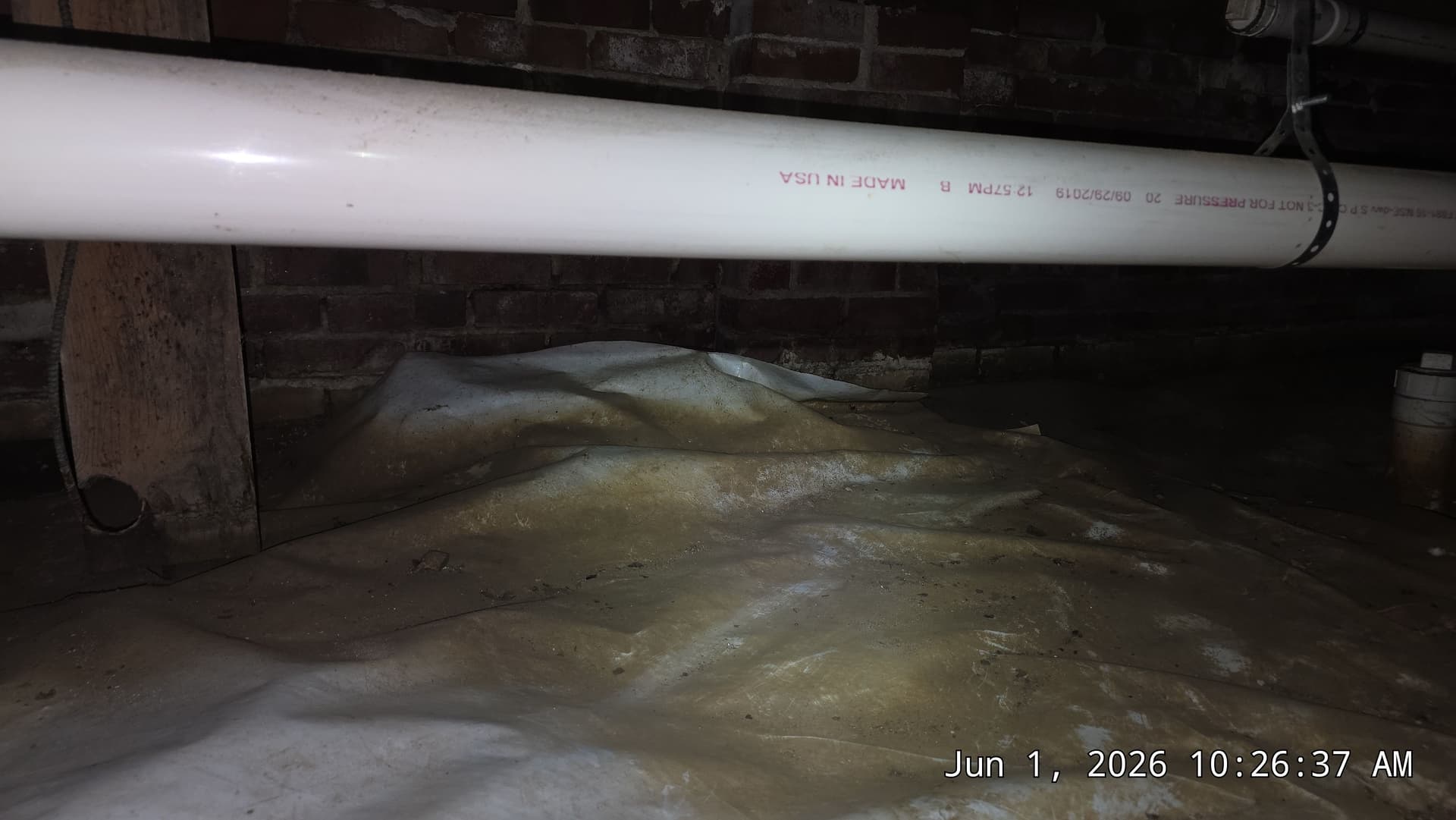
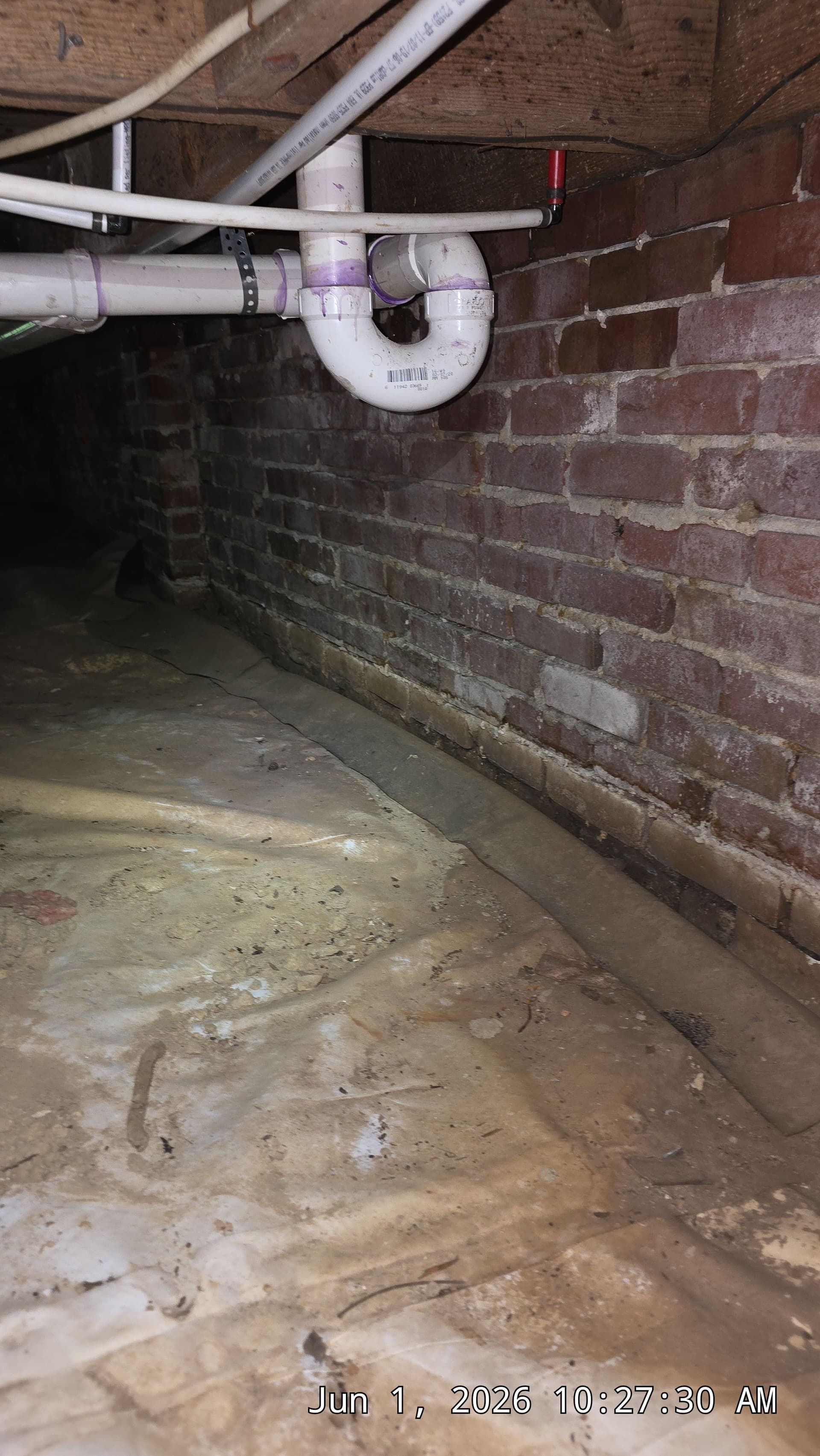
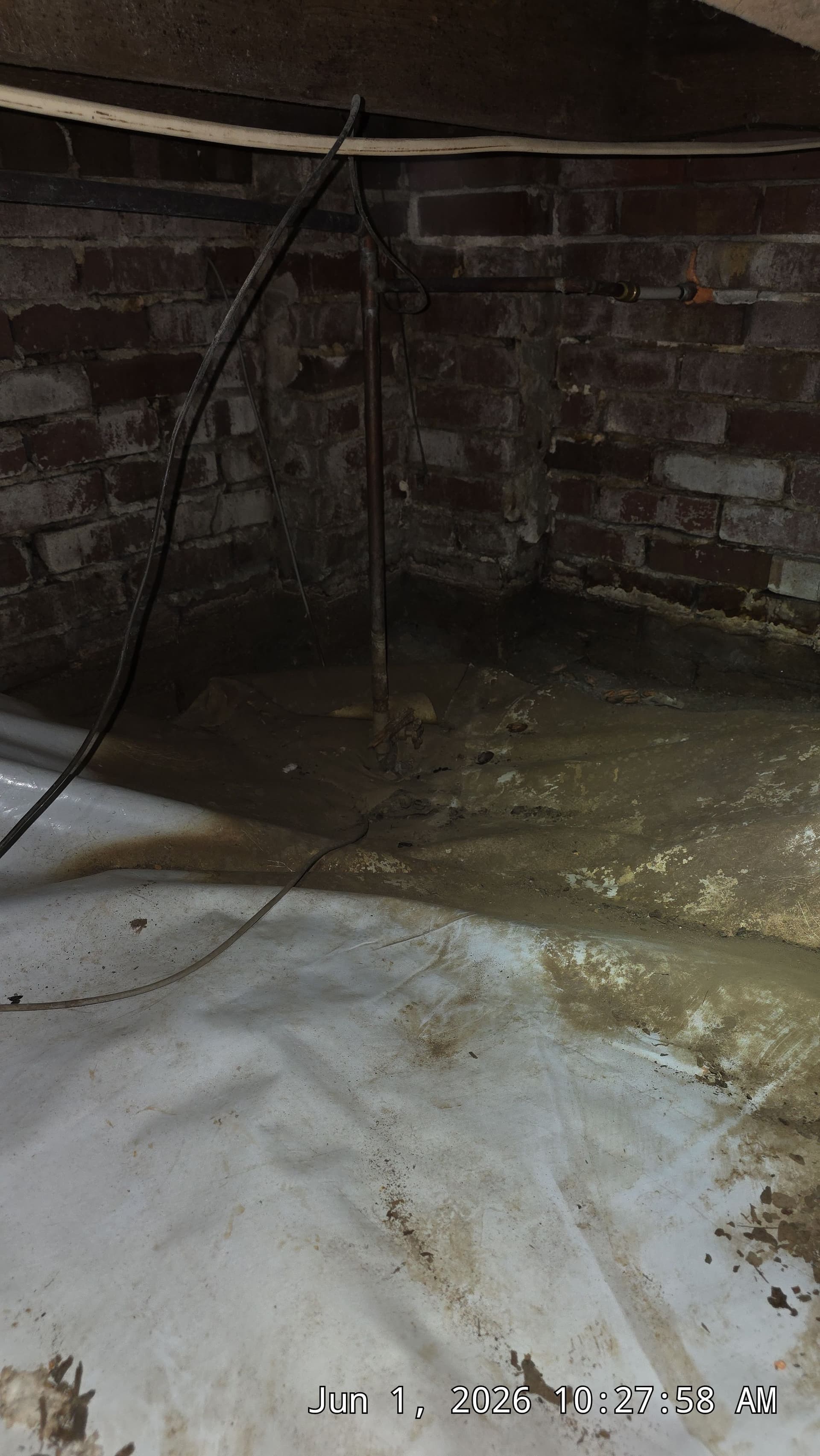
Here's something we see all the time - a homeowner has gone through a dry stretch, peeks under the house, and thinks everything looks okay. No standing water. No obvious flooding. So they move on. But what they're not seeing is the staining on old plastic sheeting, the discoloration along the base of the brick foundation walls, and the telltale wrinkling and pooling of a vapor barrier that has already failed. That's exactly what we're looking at in situations like this.
Old, inadequate vapor barrier material is one of the most misleading things in a crawl space. It gives the impression that someone already handled the moisture problem. But thin, improperly installed plastic does almost nothing to stop ground moisture from rising into the space below your home. When it's bunched up, torn, or just sitting loose on bare soil, it's not really doing a job - it's just sitting there.
The brick foundation walls tell another story. Efflorescence - that white, chalky residue you see along brick and mortar - is a direct sign that water has been moving through those walls. It doesn't happen overnight. It builds up over repeated wet cycles. A dry spell might pause it, but it doesn't fix it. The moment rain returns and the ground saturates again, that moisture is going right back through.
That's why we push hard for real crawl space encapsulation solutions, not just a layer of thin plastic. A proper vapor barrier installation means heavy-duty material, sealed seams, and coverage that actually addresses how moisture enters - from the ground and from the walls. It's the difference between a band-aid and a fix that holds up season after season.
Most homeowners don't know what to look for down there, and that's completely understandable. That's our job. If your crawl space hasn't been properly evaluated - especially after a wet season - it's worth taking a serious look before the next round of rain arrives and makes a bigger mess of things.